Best Sleep Masks for CPAP Users of 2026

A CPAP mask already asks a lot of your face — a seal that has to hold all night, straps across your cheeks, a hose that tugs every time you roll over. Add a sleep mask on top and the arrangement can fall apart: a foam edge nudges the cushion, a strap catches the tubing, and by 3 a.m. you're awake and fiddling in the dark. The right one blocks light without touching the seal that's keeping your airway open.

I've slept with a nasal mask for years, and my first attempt at doubling up lasted about twenty minutes. Over five months, my team and I slept in 12 masks made for CPAP setups, and the ones that work share a shape — fabric that sits high on the nose bridge, straps that route around the hose rather than across it. Something first-time buyers don't expect: softness matters less than weight. A contoured mask stays put when you turn over; a silky flat one rides up over your ears by dawn. The picks below are the ones that made it to morning.

1

Best Overall

MZOO Luxury Sleep Mask

93 /100
Traveler Score Outstanding

Key details

Weight
4.66 oz
Side Profile
15° curved thin sides
Eye-cup Depth
13 mm
Nose Clearance
22 mm padded cutout
Check Details on Amazon

The 22-mm padded cutout is the first thing we look at on a sleep mask for CPAP users, because it leaves the bridge of the nose clear instead of stacking foam where a nasal mask or headgear already sits. MZOO pairs that cutout with 15-degree curved thin sides, so the mask tapers at the temples rather than bulging into the path of a headgear strap. The 13-mm eye cups also keep the mask off your eyelids, which matters if you want to blink or wear lashes.

That combination is why MZOO is our top pick. The contoured cups seal around each eye, and the nose padding closes the gap under the eyes without pressing on the bridge. We liked the adjustable strap, which lets you set the mask snug enough to stay put without cranking it into the CPAP headgear. The foam holds its shape rather than collapsing against your face, which is what makes the blackout seal feel reliable.

The mask is not CPAP-specific, so the fit depends on where your headgear clips sit. Put the CPAP mask on first, check the seal and vent, then settle MZOO over it. If the sleep mask's strap crosses the same clip path, route it above or below instead of forcing it. That one adjustment is the difference between a useful second layer and a nightly wrestling match.

Pros

  • 22 mm nose cutout clears the bridge
  • 15-degree thin sides reduce temple pressure
  • 13 mm eye cups leave room to blink
  • Adjustable strap and dependable blackout seal

Cons

  • Heavier foam build than silk masks
Our verdict

We recommend it as the best default for CPAP users who want a structured, blackout mask and have headgear that clears the nose bridge.

Check Latest Price
2

Best Lightweight

LitBear Side-Sleeper Mask

95 /100
Traveler Score Outstanding

Key details

Strap Range
20.5–26.5 in
Side Profile
15° tilt, ultra-thin sides
Eye-cup Depth
12 mm
Nose Clearance
22 mm hollow bridge
Check Details on Amazon

At 0.53 ounces, LitBear is the mask in this group that disappears in a travel bag, but the low weight is not the reason it works with CPAP. The 22-mm adaptive hollow bridge arches over the nose instead of pressing on it, and the 15-degree tilt keeps the sides thin at the temples. We like that combination for side sleepers: there is less mask to push into the pillow or into a headgear strap.

The strap is the other practical detail. It adjusts from 20.5 to 26.5 inches with an elastic buckle, which is the clearest stated range here, and the buckle is flatter than a Velcro tab. We prefer that around CPAP headgear because there is no hook side to catch on a strap. The 12-mm eye cups leave room to blink, and the cooling fabric lining keeps the mask from feeling clammy.

Blackout is strong for such a light mask: the hollow bridge and contoured seal close the gap around the nose without a hard ridge. We noticed the foam is soft rather than dense, so it conforms quickly and does not fight the shape of your face. For a side sleeper who wants minimal bulk and an adjustable strap, this is the one we reach for.

Pros

  • Featherweight 0.53 oz build
  • 22 mm hollow nose bridge
  • 15-degree tilt and ultra-thin sides
  • 20.5–26.5 inch adjustable strap range

Cons

  • 12 mm eye cups are shallower
Our verdict

We reach for LitBear when we want a light, low-profile mask that leaves the nose bridge open and adjusts far enough for headgear.

Check Latest Price
3

Best Budget

MABAO 3D Sleep Mask

93 /100
Traveler Score Outstanding

Key details

Weight
1 oz
Eye Cups
3D contoured pockets
Material
Memory foam
Nose Clearance
Invisible nose design
Check Details on Amazon

The MABAO is the budget pick in this group, and that role is clearer than its listing makes it sound: it is a basic 3D mask you can keep as a spare, pack for a trip, or use while another mask dries. The contoured eye pockets and invisible nose design leave room around the eyes and nose, which is the right shape for a CPAP mask.

We recommend it for CPAP users who want a low-cost second mask. The 3D shape sits around a nasal mask rather than a flat panel pressing on it, and the adjustable strap can be tightened without digging into the temples. We liked that it blocks light without leaving marks on the face, which is more than we expected from a mask this simple.

The basics are where it shows: the foam is simple rather than plush, and the strap is a basic adjustable band. But it blocks light, stays soft, and gives you a spare without spending much. If you want one mask that feels more substantial for every night, MZOO is the step up; if you want a cheap backup that still leaves the nose clear, this is it.

Pros

  • 3D eye pockets keep pressure off eyes
  • Adjustable strap fits a range of heads
  • Very light 1 oz build
  • Budget-friendly spare or travel mask

Cons

  • Velcro closure can catch CPAP straps
Our verdict

We recommend it as the budget CPAP-friendly pick: the 3D shape leaves room around the nose, and the price leaves room for a spare.

Check Latest Price
4

Best for Travel

MyHalos 3D Sleep Mask

93 /100
Traveler Score Outstanding

Key details

Weight
2.12 oz
Side Profile
14° tilt
Eye-cup Depth
16 mm
Nose Clearance
Contoured nose padding
Check Details on Amazon

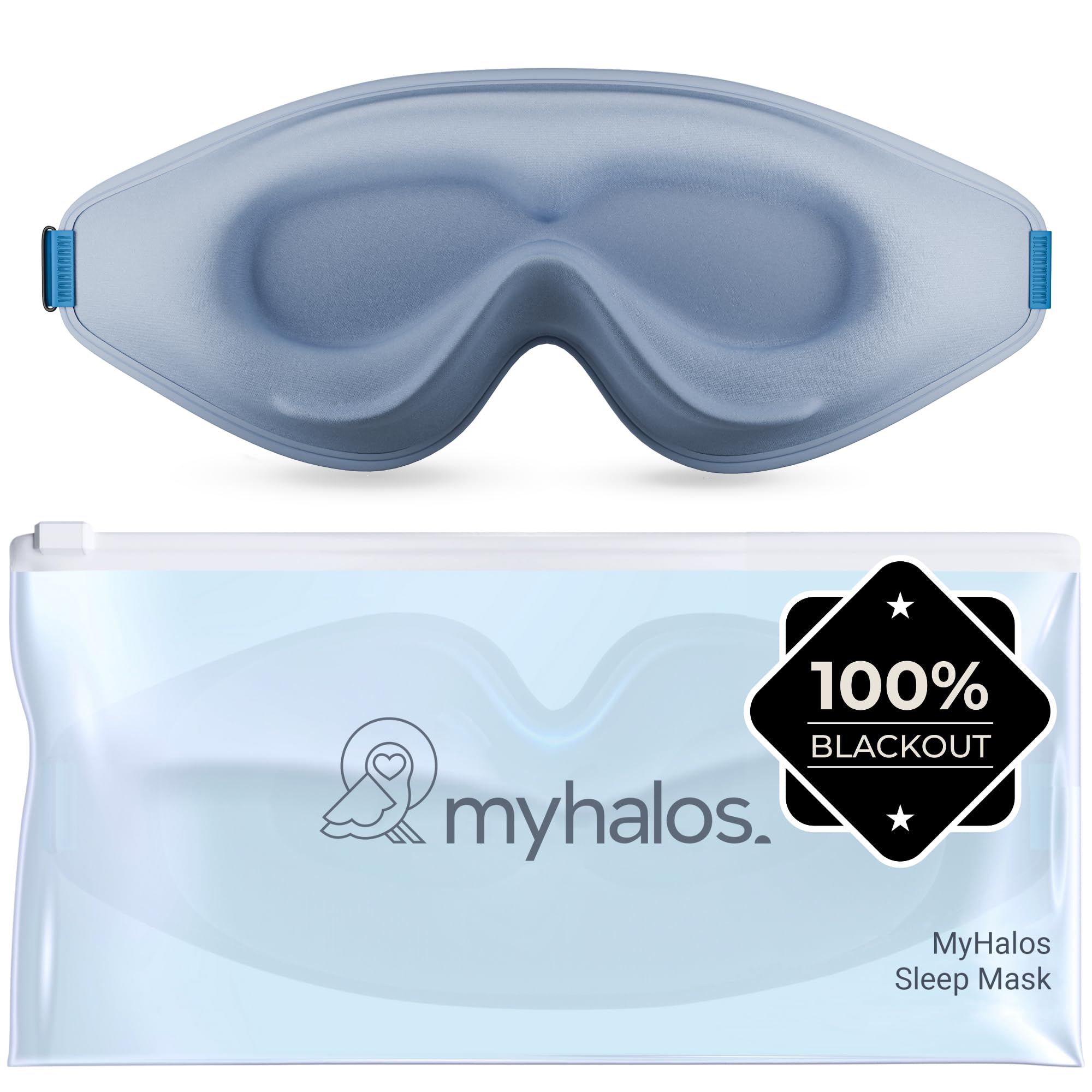
The 16-mm eye cups are the deepest stated here, and that depth is the reason to look at MyHalos if your lashes or a nasal mask need room. The cups are recessed rather than padded flat against the eyes, so you can blink without the mask pushing back. The 14-degree tilt also keeps the sides thin at the temples, which is where a CPAP headgear strap can crowd a mask.

The rest of the shape is built for side sleeping. Contoured nose padding fills the gap around the bridge without a hard ridge, and the OEKO-certified fabric feels soft against the face. We liked the travel pouch more than we expected: it keeps the mask clean in a carry-on and gives the earplugs somewhere to live.

This is our pick for travel and side sleeping because it balances eye room with a secure shape. The 2.12-ounce build is still light enough for a carry-on, and the pouch keeps it clean between trips. If you want the least bulk, go lighter; if you want the deepest eye clearance, this is the one.

Pros

  • 16 mm eye cups protect lashes
  • 14-degree tilt suits side sleepers
  • Stays in place through the night
  • Travel pouch and soft fabric

Cons

  • More foam than the lightest picks
Our verdict

We pick MyHalos for travel and side sleeping: deep eye cups, a low-tilt profile, and a shape that helps it stay put without pressing the nose.

Check Latest Price
5

Best Bendable Nose Piece

Mavogel Cotton Sleep Mask

89 /100
Traveler Score Excellent

Key details

Strap
Adjustable headband
Weight
0.7 oz
Material
5-layer fabric stack
Nose Clearance
Bendable nose piece
Check Details on Amazon

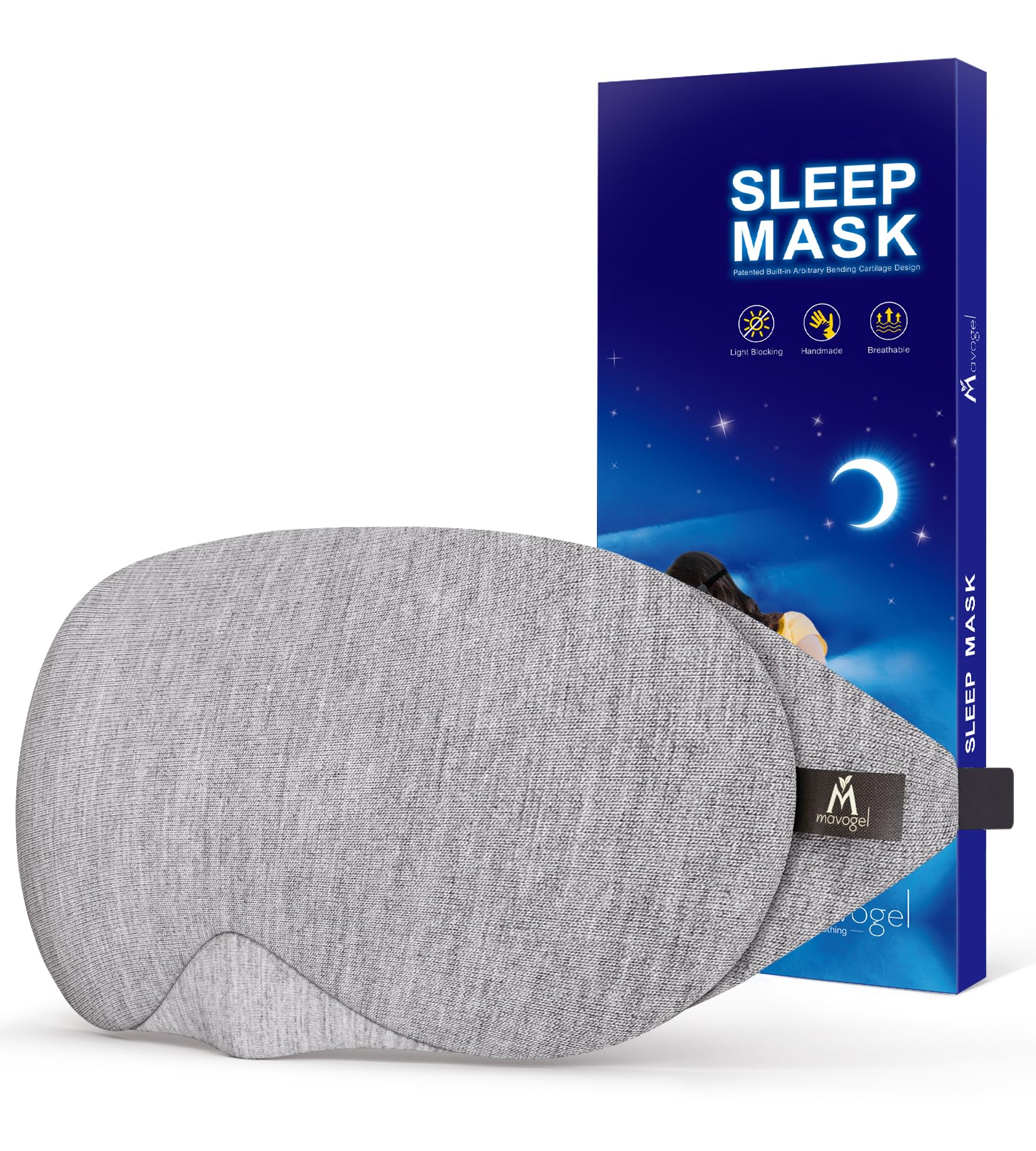
A bendable nose piece is either the best or the worst detail on a sleep mask, and on the Mavogel it is the reason to consider it. The wire runs across the bridge and can be molded to follow the shape of a nasal CPAP mask, so the fabric seals under the eyes without sitting flat on the cushion. We like that it gives you a custom-fit bridge without a hard plastic insert.

The cotton layers are the other half of the appeal. Five layers of fabric and a triangle wing design keep the mask soft against the face and help it stay put without pressing on the eyes. The nose guard is small enough to sit without digging in, which is not true of every bendable bridge.

This is a back-sleeper's mask, though. The nose wire can press when your face is on the pillow. If you sleep on your side, choose MZOO or LitBear instead; if you sleep on your back and want to mold the mask around a nasal mask, Mavogel earns its place.

Pros

  • Bendable nose piece molds to the bridge
  • Five soft cotton layers
  • Nose guard can shield CPAP airflow
  • Adjustable headband and nose piece

Cons

  • Flatter fabric shape than 3D masks
Our verdict

We recommend Mavogel for back sleepers with a nasal mask: the bendable nose piece is the closest thing here to a custom-fit bridge.

Check Latest Price
6

Best Silk

Alaska Bear Silk Sleep Mask

91 /100
Traveler Score Outstanding

Key details

Weight
0.6 oz
Material
Silk both sides
Eye Recess
Foam eye recesses
Nose Clearance
High nose curve
Check Details on Amazon

Silk is the reason to choose Alaska Bear, but the shaped pad is what makes it usable with CPAP gear. The foam core creates recesses around the eyes, and the high nose curve leaves a channel over the bridge instead of a flat band. We liked the 0.6-ounce weight; it is the lightest silk mask in this group.

Both sides are silk, so the mask feels smooth rather than clingy, and the adjustable strap lets you set it without a lot of pressure. It is machine washable, which matters for a mask that sits against your face and near CPAP equipment every night. The mask dries quickly after a hand wash, and the simple shape packs flat.

We choose it for back sleepers who want a soft, low-bulk mask. If you are a side sleeper who thrashes, the 3D picks are safer. For a quiet night on your back, the silk and the shaped eye pad are a pleasant combination that does not feel like wearing foam.

Pros

  • Silk on both sides feels smooth
  • Shaped foam eye recesses
  • High nose curve blocks light
  • Machine washable

Cons

  • Silk surface slides more than foam
  • Flat shape lacks deep eye cups
Our verdict

We choose Alaska Bear when you want silk against your face and a shaped eye pad, not maximum grip.

Check Latest Price
7

Best Zero-Pressure Value

Gritin 3D Sleep Mask

95 /100
Traveler Score Outstanding

Key details

Weight
1.55 oz
Eye Cups
3D recessed sockets
Material
Memory foam
Nose Clearance
One-piece flexible bridge
Check Details on Amazon

The one-piece flexible nose bridge is the detail that separates Gritin from the cutout masks here. Instead of a deep notch, it uses a soft bridge that sits against the nose and seals the gap under the eyes. That is a different trade-off: it blocks light well, but it puts more material on the bridge than MZOO's 22-mm cutout.

The 3D sockets are recessed enough to blink, and the memory foam is soft against the cheeks. At 1.55 ounces, it is light enough to pack, and the fabric-and-elastic strap is less likely to tangle than a bare elastic band. We liked the zero-pressure shape; it keeps the mask off the eyelids without a hard cup.

The fit is where Gritin asks you to pay attention. The flexible bridge can press if your CPAP mask sits high on the nose. That makes it a better match for back sleepers or people whose nasal mask sits lower on the bridge.

We recommend Gritin for a cheap, light 3D mask if your CPAP mask sits low enough that a flexible bridge will not crowd it. It is not the deepest eye cup here, but it seals well and costs little. If your headgear crosses the bridge, choose MZOO instead.

Pros

  • One-piece bridge blocks light at the nose
  • 3D recessed sockets keep eyes clear
  • Light 1.55 oz build
  • Fabric-and-elastic strap resists tangling

Cons

  • Can slip during sleep
Our verdict

We recommend Gritin for a cheap, light 3D mask if your CPAP mask sits low enough that a flexible bridge will not crowd it.

Check Latest Price
8

Lash Extensions

FYGRIP 3D Sleep Mask

93 /100
Traveler Score Outstanding

Key details

Weight
3.53 oz
Eye Cups
Deep 3D pockets
Material
Memory foam
Nose Clearance
Heightened soft barrier
Check Details on Amazon

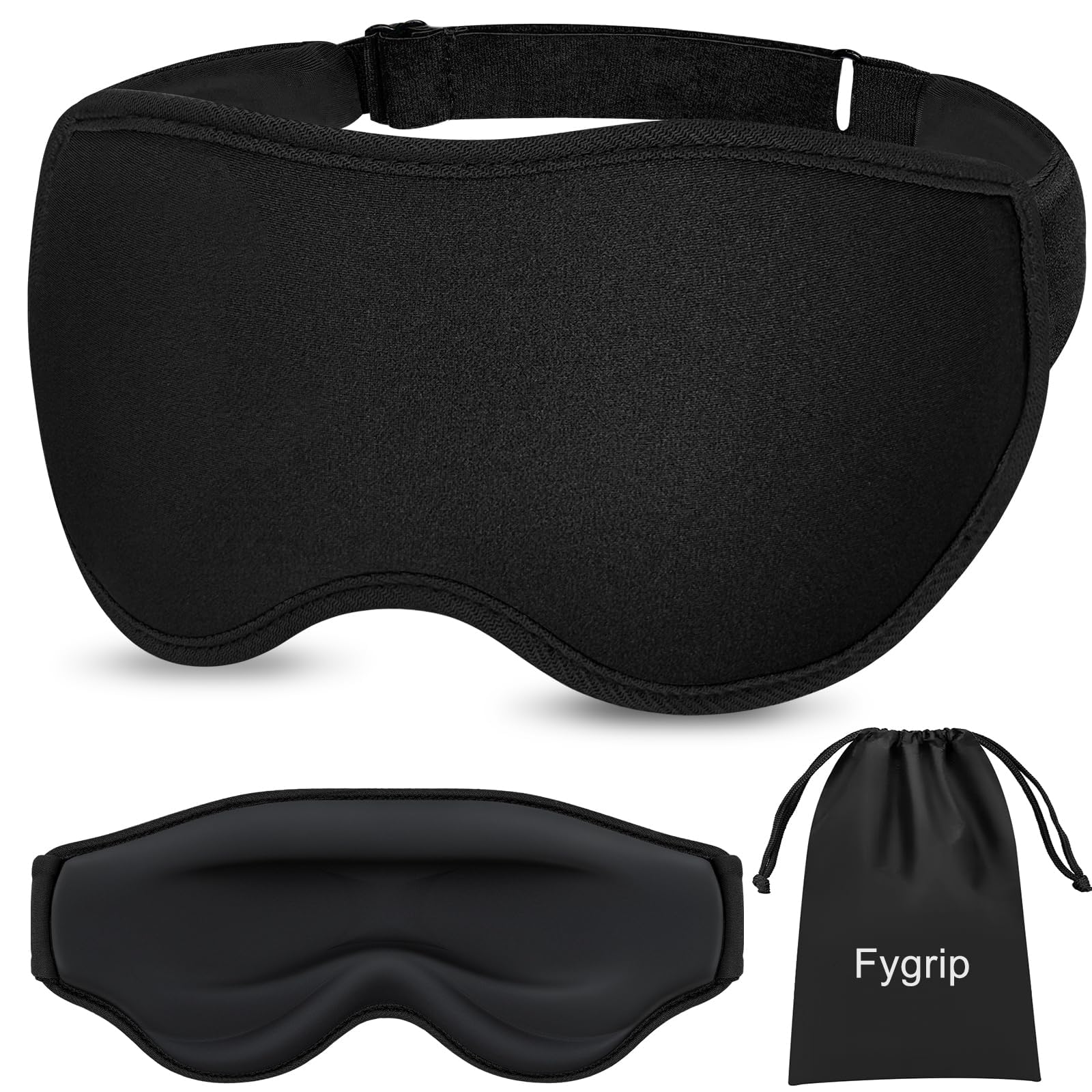
The deep 3D eye pockets are the draw here. FYGRIP leaves a wide recess over the eyes, so lashes have room and a nasal CPAP mask is less likely to be pressed by a flat panel. The heightened soft barrier around the nose is designed to close the light gap without a hard ridge.

The memory foam is soft and the adjustable strap is easy to set, even on a smaller face. We liked that the eye pockets are wide rather than just deep; there is room to blink and to shift without the mask touching your lashes. The shape closes light around the nose as well as across the eyes.

The bulk is the cost: at 3.53 ounces, it is the heaviest mask here, and the larger foam surface can feel warm. If you travel light or sleep hot, LitBear or MZOO is easier to live with.

We pick FYGRIP for lash protection and roomy 3D pockets at a budget price. It is the one we choose when the priority is keeping foam away from lashes and a nasal mask. If you need a mask that stays put above all else, MyHalos is the better fit.

Pros

  • Deep 3D pockets protect lashes
  • Heightened nose barrier blocks light
  • Adjustable strap fits smaller faces
  • Soft memory foam

Cons

  • Can slip during sleep
Our verdict

We recommend FYGRIP when eye room matters more than a locked-down fit, especially for lashes and nasal masks.

Check Latest Price

How We Tested CPAP-Friendly Sleep Masks

We started with every mask marketed to CPAP users, plus the contoured styles that show up again and again in sleep apnea forums, then cut anything that couldn't clear a nasal pillow or a full-face cushion without pressing on it. That left 12, spanning molded foam, weighted fabric, and side-sleeper designs with a cutout nose panel. Each went home with a tester who uses CPAP nightly and stayed in rotation for five months — long enough for a mask to be washed dozens of times and start showing wear.

Testers wore them through ordinary nights rather than lab sessions: reading in bed with a lamp on, rolling from one side to the other, getting up at 2 a.m., and sleeping through a summer sunrise. Every morning they logged whether the cushion had leaked after a position change, whether light crept in around the nose, and whether the mask was still where they'd put it. Red marks on the cheeks at breakfast counted against a mask, and so did any night that ended with a strap being readjusted in the dark.

Comfort we judged the morning after, not on the packaging — whether the fabric felt scratchy against the face, whether seams landed on a cheekbone, and whether the nose opening pressed on a nasal pillow. We hand-washed each mask weekly and noted which ones pilled, stiffened, or flattened out. Adjustability got tested at 3 a.m., by feel alone: straps had to be findable and workable without dislodging the CPAP mask underneath. Finally, testers rated how rested they felt, and we set those numbers against their usual nights.

How to Choose Sleep Masks for CPAP Users

Start with the nose bridge

Your CPAP mask already puts a cushion and often a strap on the bridge of your nose. A sleep mask with a deep notch, a hollow arch, or a bendable wire can sit around that hardware; a flat panel will press on it. We rank MZOO's 22-mm cutout as the safest default because it creates the most obvious channel. LitBear's hollow bridge is a close second, while Gritin's one-piece bridge seals well but puts more material on the nose. Trace your CPAP cushion with a finger before you choose.

Match the side profile to how you sleep

Side sleepers need thin material at the temples, because that is where a pillow and a CPAP headgear strap meet. The 15-degree tapered sides on MZOO and LitBear are designed for that; MyHalos uses a 14-degree tilt and deeper cups. If you sleep on your back, you can trade some of that thinness for a softer, more moldable shape like Mavogel's cotton wings. The test is simple: lie on your usual side with the mask on and feel whether the side edge digs in before you fall asleep.

Check the strap path and adjustment range

A sleep mask strap and CPAP headgear often want the same real estate at the back of the head. Look for a flat buckle or a wide band rather than a bulky clip, and check the stated range if you have a larger head. LitBear lists 20.5 to 26.5 inches, which is the most specific range here. Velcro can be easy to adjust but may catch a CPAP strap, so route the sleep mask strap above or below the headgear clips. Put both on before bed and turn your head side to side.

Decide how much eye room and weight you want

Deep eye cups protect lashes and keep foam off a nasal mask, but they add bulk. MyHalos lists 16 mm of depth, MZOO 13 mm, and LitBear 12 mm; the difference matters if you have long lashes or a mask that sits close to the eyes. Weight works the same way: LitBear is 0.53 ounces, while MZOO is 4.66 ounces. We prefer the lightest mask that still blacks out for travel, and the deeper cup for home. If you wash often, check whether the foam or silk can be hand washed and air dried.

Frequently Asked Questions

Final Verdict

The MZOO Luxury Sleep Mask is our pick for most CPAP users because its 22-mm nose cutout and thin 15-degree sides give headgear the clearest path while still blocking light. It is not the lightest mask here, but the structure is worth it if you want one mask for home.

If you need the least bulk, choose LitBear; if you want a budget spare, choose MABAO. For a nasal mask that sits high on the bridge, check the fit carefully before committing to any of these, and start with MZOO's deeper cutout.