Best Ski Jackets of 2026

The fear with a ski jacket is simple: you spend real money, then freeze on the chairlift or fight a zipper with numb fingers. A good one fixes both before you click into your bindings—it traps warmth, vents when you hike, and fits well enough to layer underneath. I grew up in hand-me-down shells that were too short in the sleeves or too boxy through the middle, so fit and sizing are the first things I notice.

Over the past six months, our team tested eight ski jackets in everything from icy morning groomers to wet spring slush, judging warmth, build quality, zipper performance, and how each one looked and felt on different bodies. We had testers try their usual size and a size up, since listed sizing and real-world fit rarely match perfectly. Color turned out to matter on flat-light days, and value came down to whether the warmth and construction justified the price. The picks below are the ones we’d actually reach for again.

1

Best Overall

CAMEL CROWN Men's Mountain Snow Ski Jacket

94 /100
Traveler Score Outstanding

Key details

Hood
Detachable
Department
Men's
Waterproofing
Waterproof
Package Size And Weight
20.91 x 17.36 x 7.4 inches; 2.73 pounds
Check Details on Amazon

At 2.73 pounds, the Mountain Snow is the jacket we reach for when the forecast is cold but we don't want to ski in a sleeping bag. The fleece-backed shell traps warmth without the puffy silhouette of a down parka, and the high collar closes the gap that usually lets cold air slide down your neck.

The waterproof shell and storm flap are the parts that matter when the snow turns wet. We also like the detachable hood for travel and the thumbhole cuffs, which keep the sleeves from riding up when you reach for a pole. The pockets sit where gloved hands can find them, and the chest pocket is small but useful for a pass.

Sizing is the one thing to get right. The jacket can run small through the chest, so we sized up to leave room for a midlayer and were glad we did; use the size chart rather than your street size. The detachable hood can bunch at the collar when it's zipped on, but we leave it attached on storm days because the high collar works better with it.

What keeps this at the top of our list is how little it asks of you: no wrestling with a bulky lining, no cold spot at the neck, no need to change jackets between a groomer and a wet lift. It is not the most technical shell here, but it is the one we are happiest to wear all day.

Pros

  • Warm without puffy bulk
  • Waterproof shell with high collar
  • Detachable hood and thumbhole cuffs
  • Light enough for all-day wear

Cons

  • Zipper quality is uneven
Our verdict

This is the men's jacket we recommend for most cold, wet ski days: warm without bulk, properly waterproof, and light enough to forget on the lift.
Check Latest Price
2

Best Women's Overall

MAGCOMSEN Women's Winter Ski Jacket

91 /100
Traveler Score Outstanding

Key details

Hood
Detachable
Department
Women's
Waterproofing
Waterproof
Wind Protection
Windproof
Check Details on Amazon

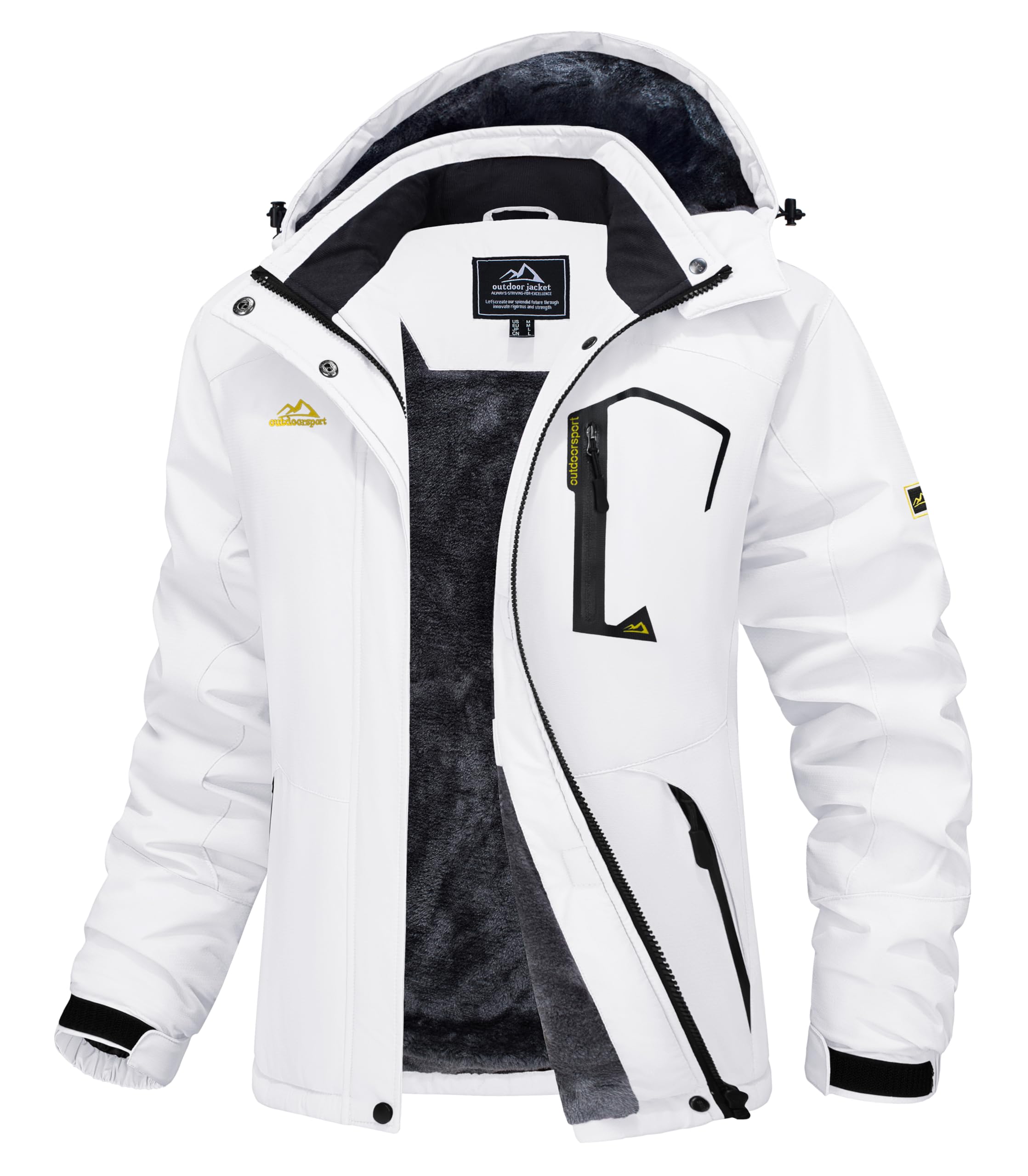
Wind is the part of a ski day that makes a warm jacket feel useless. This MAGCOMSEN closes that gap with a high collar, a hood that zips off, and cuffs that cinch down over gloves. The shell has a soft, quiet hand rather than the crisp feel of a technical hardshell, which makes it pleasant on the lift and around town.

What makes it our women's all-around pick is the balance: the fleece lining holds heat without turning the jacket into a bulky layer, and the body has enough room for a thin fleece underneath. The deep, zippered hand pockets are easy to reach with a pack on, and the bright color options are genuinely visible on the hill.

The sleeves are the fit detail to check. They can come up short on long arms, so try a size up if you're between sizes or add a longer base layer. The fleece lining is concentrated in the torso, so the sleeves feel lighter and less clammy under a pack, though they don't add much warmth on their own.

We keep coming back to the high collar on windy days; it does more for warmth than the hood when the sun is out. The detachable hood is useful for travel, but the collar is the detail that makes this jacket feel thought through.

Pros

  • Windproof warmth for cold lifts
  • Roomy enough for a midlayer
  • Detachable hood and deep pockets
  • Bright color options are easy to spot

Cons

  • Sleeves run short for long arms
Our verdict

For women who ski windy, cold lifts and want room for a fleece, this is our women's all-around pick: warm, windproof, and easy to layer.

Check Latest Price
3

Best Value for Men

TACVASEN Men's Winter Skiing Jacket

95 /100
Traveler Score Outstanding

Key details

Hood
Removable
Department
Men's
Insulation
Thermal
Waterproofing
Waterproof
Check Details on Amazon

The TACVASEN is cut longer than most of the men's jackets here, and that extra coverage is the reason we keep it in the value conversation. The hem covers the seat, the sleeves are properly long, and the removable hood leaves a clean collar when you don't need it. For a jacket at this end of the price range, the warmth feels more generous than the build suggests.

The thermal lining and wind-blocking shell handle cold lift rides, especially with a midlayer underneath. We like the roomy cut for layering, and the faux-fur body lining adds a soft, warm feel without making the jacket feel heavy. The pockets are useful, and the longer hem keeps snow from creeping up your back when you bend over.

It runs large, so slim builds should size down; if you want a hoodie underneath, the extra room is welcome. The removable hood is more useful than we expected on spring days, when a full hood feels like overkill. The longer hem is the detail that keeps this jacket in our rotation for cold chairlifts.

The jacket is not the most polished here, but the coverage and warmth are what matter when the wind picks up. We treat it as a solid second jacket for someone who wants the ski-day basics without paying for technical extras.

Pros

  • Long hem covers the seat
  • Warm thermal lining for cold days
  • Removable hood adds versatility
  • Strong value for a roomy jacket

Cons

  • Pocket zippers can fail early
Our verdict

We recommend this to men who want a longer, warmer jacket without premium pricing; just size down if you're between sizes.

Check Latest Price
4

Best Budget for Women

SUOKENI Women's Waterproof Snow Coat

91 /100
Traveler Score Outstanding

Key details

Hood
Hooded
Pockets
Zippered
Department
Women's
Waterproofing
Waterproof
Check Details on Amazon

The SUOKENI is the women's jacket we point to when the budget is tight but the trip is real. It doesn't feel like a compromise on the basics: the shell sheds wet snow, the fleece lining holds warmth, and the hood is big enough to pull over a helmet.

The pockets are the pleasant surprise. There are enough zippered compartments to keep a phone, pass, and snack separate, and the inside pocket keeps the important stuff close. The jacket is comfortable enough to drive in, which matters on a ski trip when you're layered up before you reach the lot.

That combination is why it earns a place as our budget women's pick. It is warm enough for a cold day with a base layer, and the water-resistant finish handles snow that soaks a casual coat. The cut is roomy, so size down if you want a closer fit; if you're layering a hoodie, the extra space is useful.

The inside pocket is the detail we use most: it keeps a phone warm and out of the way, and the zippered hand pockets are deep enough for gloves. For a first ski jacket or a spare for a growing family, that is the right kind of compromise.

Pros

  • Warm and water-resistant for the money
  • Plenty of zippered pockets
  • Comfortable enough to drive in
  • Generous hood fits over a helmet

Cons

  • Hood is oversized without a helmet
Our verdict

This is the women's jacket we suggest when the budget is tight but the ski day is real: warm, water-resistant, and full of useful pockets.

Check Latest Price
5

Best Lightweight for Women

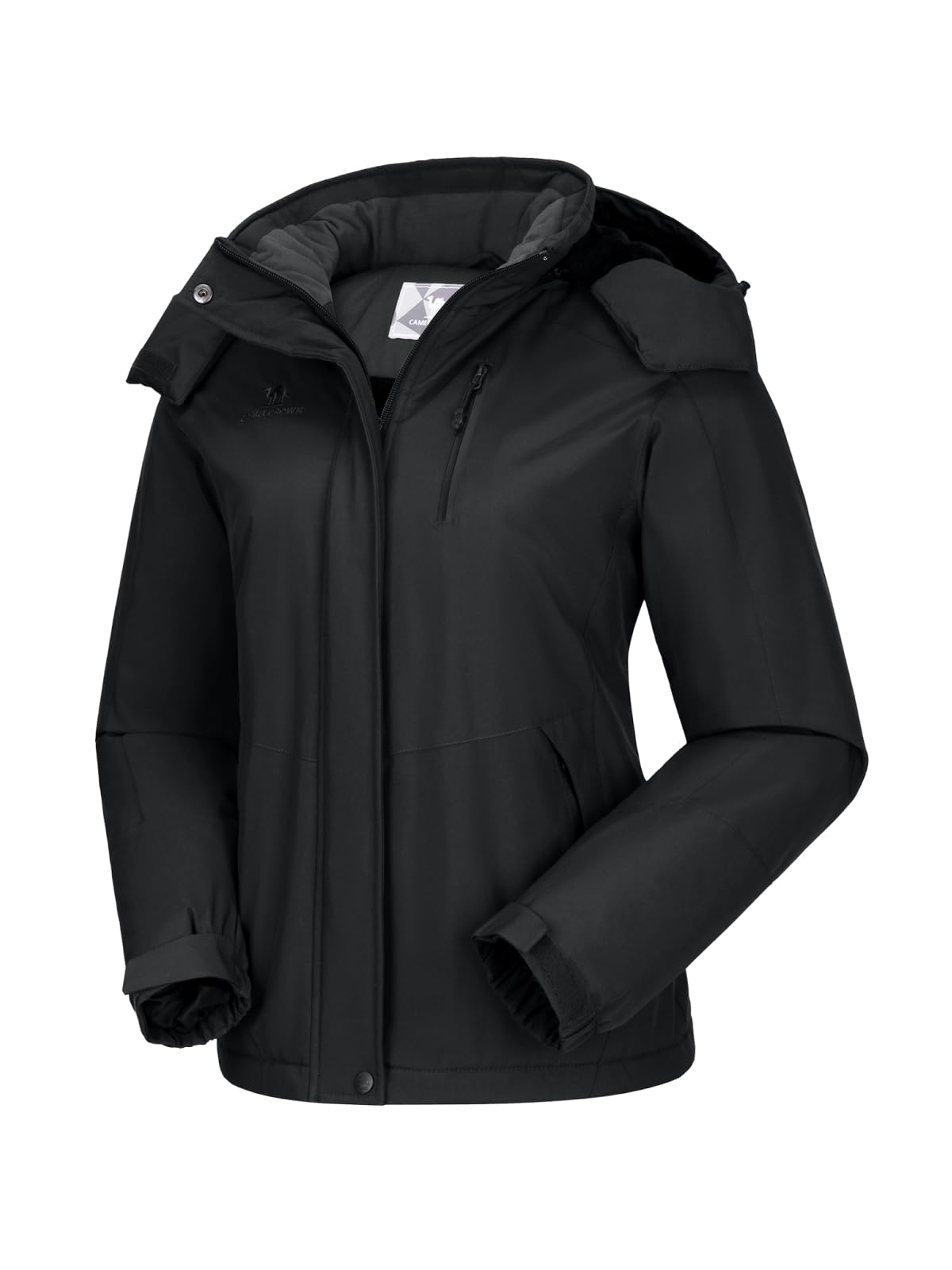
CAMEL CROWN Women's Ski Jacket

92 /100
Traveler Score Outstanding

Key details

Weight
Lightweight
Pockets
Zippered
Department
Women's
Waterproofing
Waterproof
Check Details on Amazon

The lining is the first thing our fingers find, and it is softer than the price suggests: a brushed feel that makes the jacket easy to pull on over a base layer. The shell is light, too, so it doesn't fight you when you swing your arms or tighten a boot.

We rate it as the best lightweight women's pick because it balances warmth and movement. The insulation is enough for a cold resort day with a thin fleece, and the waterproof shell keeps wet snow from turning the outing short. The deep, angled pockets are easy to load with gloves on.

The sleeves are the right length for most women, and the shoulders are roomy without feeling oversized. It layers neatly over a thin fleece, and the hem stays out of the way when you bend to adjust a boot. The soft lining is the detail we notice every time; it makes a thin base layer feel like enough.

Pros

  • Lightweight warmth without bulk
  • Waterproof shell for wet snow
  • Soft lining and deep pockets

Cons

  • Short, boxy cut
Our verdict

We rate this as the best lightweight women's pick for women who run warm or ski spring conditions; it works best with a thin midlayer.

Check Latest Price
6

Best Cold-Weather Newcomer

Yufawow Men's Winter Ski Jacket

94 /100
Traveler Score Outstanding

Key details

Lining
Fleece
Department
Men's
Insulation
Insulated
Waterproofing
Waterproof
Check Details on Amazon

The Yufawow is the newest jacket in our lineup, so we treated it with more skepticism than the rest. That did not last long: the fleece lining has a furry, blanket-like feel, the sleeves are long enough for a tall frame, and the shell blocks wind without feeling stiff.

The warmth is the reason it stands out. The insulation and fleece lining handle cold, dry days well, and the waterproof shell keeps wet snow from soaking through. The Velcro cuffs cinch down over gloves, and the zippered pockets are placed where you can reach them without taking off a pack.

The fit is generous through the chest and long in the sleeve, which is good news for taller skiers who usually size up and then swim in the body. The jacket has no loose strings or flimsy trim, and it looks sharper on than the price suggests.

That combination makes it the one we recommend for bitter, dry cold, especially if you want a fleece-lined jacket that doesn't feel like a puffy coat. It is not the most proven design here, but the early signs are strong.

Pros

  • Fleece lining feels warm and soft
  • Long sleeves suit tall frames
  • Waterproof and wind-blocking shell
  • Velcro cuffs seal over gloves

Cons

  • Zippers can stick
Our verdict

This is the men's jacket we point to for bitter, dry cold: the fleece lining and long sleeves feel made for tall frames.

Check Latest Price
7

Mild-Day Skiing

MAOYSSEN Men's Ski Jacket

92 /100
Traveler Score Outstanding

Key details

Department
Men's
Water Resistance
Water-resistant
Package Size And Weight
15.75 x 12.99 x 3.15 inches; 2.98 pounds
Check Details on Amazon

The MAOYSSEN is the jacket we reach for when the forecast is mild and the goal is a few spring laps, not a summit push. It is light for its warmth, with a thick fleece lining that traps heat without the bulk of a down parka, and the shell keeps rain and wet snow from soaking through.

The details are better than the price suggests: deep pockets, a hood that covers the neck, and a cut that leaves room for a hoodie or bulky sweater. The 2.98-pound weight is easy to pack, and the water-resistant shell is enough for wet spring snow.

That midweight build is why we treat it as a shoulder-season and mild-day jacket rather than a deep-winter workhorse. If you ski in single-digit cold, you'll want more insulation; if your trips are mostly spring slush or travel, it is a smart, light layer.

The inside pockets are a useful touch for a phone or pass, and the hood is cut close enough to wear under a helmet without fighting. The jacket looks more expensive than it is, which matters if you want one coat for the hill and the drive home.

Pros

  • Warm fleece lining without heavy bulk
  • Water-resistant shell handles wet snow
  • Light enough to pack

Cons

  • Zipper quality is inconsistent
Our verdict

We treat this as a smart buy for mild ski days and travel: light, warm, and better looking than its place in the lineup suggests.

Check Latest Price
8

Women's Layering

CAMELSPORTS Women's Snow Ski Jacket

90 /100
Traveler Score Outstanding

Key details

Hood
Hooded
Insulation
Insulated
Waterproofing
Waterproof
Package Size And Weight
14.57 x 12.99 x 3.94 inches; 2.36 pounds
Check Details on Amazon

A two-way zipper is either a thoughtful ski detail or a glove-box fumble, and on this CAMELSPORTS it is a bit of both. We appreciate the lower zip that lets you open the jacket from the bottom when you sit on a chairlift, but the two sliders take practice to line up, especially with cold hands.

The warmth is the reason to keep it. The fleece lining and insulated body handle cold days with a thin base layer, and the waterproof shell keeps wet snow from soaking through. It is light enough to wear on the drive up without feeling like you're already dressed for the summit.

The pockets are a strong point: the zippered hand pockets are deep, and the chest pocket is useful for a pass or phone. The hood is removable, which is handy for travel, and the cuffs close down over gloves. The jacket has a soft, quiet feel rather than a crinkly shell.

That combination makes it a good women's layer for cold days when you want room for a sweater, not a second skin. It is not the most polished jacket here, but the warmth and pockets do the important work.

Pros

  • Warm without feeling bulky
  • Waterproof shell for wet days
  • Deep zippered pockets
  • Removable hood for travel

Cons

  • Runs large through the body
Our verdict

We rate this as a light, warm women's layer for cold days when you want room for a sweater; the two-way zip takes practice.

Check Latest Price

How We Tested the Best Ski Jackets

We started by pulling together jackets recommended by ski patrol friends, outdoor-gear retailers, and our own past seasons, then narrowed the list by available sizes, insulation type, waterproof ratings, and price band so we weren’t comparing a resort shell to a parka. That left eight jackets, which we wore for six months—through resort mornings, storm days, a few bootpacks, and the inevitable parking-lot shuffle.

On the snow, testers wore each jacket over a base layer and midlayer on cold chairlift rides and then opened vents for the hike up or the walk back to the car. We noted whether warmth felt even across the chest and arms, whether seams and baffles held their shape after being stuffed into a duffel, and whether the fabric showed scuffs from branches or lift bars. Zippers got special attention: we worked them with gloves on, at the top of the lift, and after wet snow had built up on the draft flap, watching for snags, skipped teeth, and any draft that slipped through.

Fit and sizing were judged on real bodies. Testers of different heights and builds tried their usual size and, where available, one size up, then raised their arms, buckled boots, and reached for a pole to see if sleeves rode up or shoulders pulled. We also looked at appearance and color in flat light and bright sun, since a jacket that blends into the snow can be harder to spot from across the lift line. Value was the final filter: we asked whether the warmth, construction, zipper, and fit felt like a fair trade for what the jacket costs, not just whether it was the cheapest option.

How to Choose Ski Jackets

Start With Waterproofing, Not Just Warmth

A ski jacket's first job is keeping wet snow out. A waterproof shell with protected seams and a storm flap over the main zip is the safer choice for resort skiing; a water-resistant fabric is fine for dry snow and spring conditions, but it can soak through on a wet chairlift.

This is where a jacket like the CAMEL CROWN men's model earns its keep: the waterproof shell and high collar handle wet weather, while the fleece adds warmth. If you ski mostly in dry cold, you can spend less on waterproofing and more on insulation, but don't assume every puffy coat is built for snow.

Choose Insulation You Can Layer With

Insulated jackets are the default for cold resorts, but the warmest one is not automatically the best. A jacket that leaves room for a thin fleece gives you more range than a heavily insulated coat you can only wear in January. Look for a soft lining, a high collar, and cuffs that seal over gloves.

A lighter insulated jacket like the CAMEL CROWN women's model is enough for spring snow or a skier who runs hot. A fleece-lined men's jacket like the Yufawow is the better call for dry cold. The trap is buying for the coldest day of the year and then sweating through every other one.

Fit the Shoulders, Sleeves, and Hem

Start with the shoulders and sleeve length, not the letter on the label. You need room for a midlayer without the hem riding up or the cuffs swallowing your hands. A long hem is useful on chairlifts; a short, boxy cut is easier to wear with high-waisted pants.

Sizing varies enough between these jackets that your street size is only a starting point. The TACVASEN runs large, the SUOKENI runs roomy, and the MAGCOMSEN sleeves can come up short. Check the size chart and, if you're between sizes, choose based on the layer you plan to wear underneath.

Check the Hood, Zipper, and Pockets

Hardware is where budget jackets separate. A main zip that sticks or separates in the cold can ruin a day, and pocket zips are often the first thing to fail. Test the main zip with gloves on, look for a storm flap, and make sure the hood turns with your head rather than blocking your view.

A detachable hood is useful for travel, but it needs to sit cleanly when attached. Pockets should be zippered and reachable with a pack on; an inside pocket for a phone is worth more than a decorative chest pocket. The MAGCOMSEN women's jacket gets this right with deep, zippered hand pockets and a hood that zips off.

Decide How Much Jacket You Need

Not every ski day is a deep-winter day. A midweight jacket like the MAOYSSEN is fine for mild days and travel, but it isn't the one for a frigid storm. If you ski a handful of days a year, a versatile insulated jacket is a better buy than a specialized shell.

Think about the conditions you actually ski, not the ones you see in gear ads. A warm, waterproof resort jacket covers most trips; a lighter layer is better for spring snow or a skier who runs hot. Buy for the forecast you'll meet most often, then add a midlayer for the cold snap.

Frequently Asked Questions

Final Verdict

Start with the CAMEL CROWN men's Mountain Snow if you want one jacket for most cold, wet ski days: it is warm without bulk, properly waterproof, and light enough to wear from first chair to last. Women who feel the wind on exposed lifts should look at the MAGCOMSEN first for its warmth, layering room, and detachable hood. If the budget is tight, the SUOKENI is the pragmatic women's buy, provided you size for its roomy cut.