Best Ski Gloves for Men of 2026

Every ski glove is a negotiation: the warmer it is, the less you can feel the zipper pull on your jacket. Get the balance wrong and you're either freezing on the lift or fumbling with your poles at the top of the run. What a good pair actually fixes is simpler than the marketing suggests — your hands stay dry through a wet, heavy snowstorm, and you can still buckle your own boots without taking them off.

Fit is where most people go wrong first. A glove that's snug across the palm but short in the fingers will feel cold no matter how much insulation is inside, and sizing varies wildly between brands. My team and I spent four months this winter in 12 pairs of men's ski gloves, from budget workhorses to premium leather gauntlets, through resort laps, lift rides, and cold driveway shoveling. The ones that held up were still warm and dry on the third run of a nasty day, and those are the picks below.

1

Best Overall

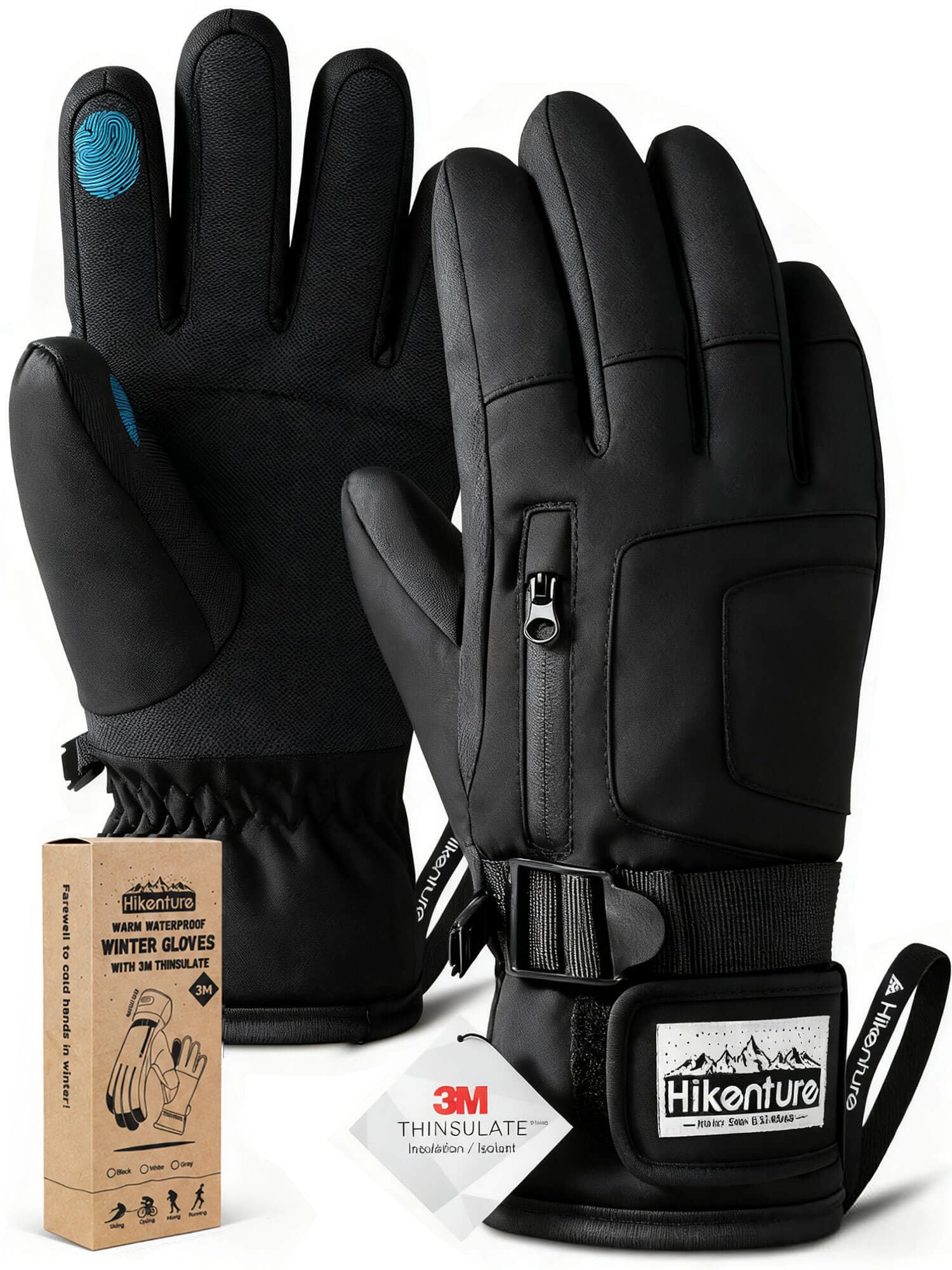
Hikenture Ski Gloves

89 /100
Traveler Score Excellent

Key details

Extras
Touchscreen fingertips, waterproof zip pocket
Weight
4.94 oz
Warranty
1 year
Construction
3M Thinsulate + Waterproof TPU membrane + Fleece Lining
Check Details on Amazon

Three layers do the work here: 3M Thinsulate for warmth, a waterproof TPU membrane, and a fleece lining against the skin. That combination is what we look for in a ski glove, and it's what most inexpensive pairs skip — a water-repellent shell sheds snow for a run or two, but a membrane is what keeps your hands dry after a morning on a wet chairlift. Of everything in this guide, this is the pair we point a first-time skier toward.

The details are ski-specific rather than generic winter-glove filler. There's a small waterproof zip pocket on the back of the hand that swallows a pass or a hand warmer, touchscreen fabric on two fingertips, and a reinforced anti-slip palm for poles and boot buckles. At 140 grams these are light for an insulated glove, and that's the difference between leaving them on to work a buckle and pulling one off with your teeth at eight in the morning.

Sizing is the one thing to sort before you order. The fit isn't consistent enough to trust your usual glove size — the palms run roomy on some hands and snug on others — so use Hikenture's chart against a measured hand. Because the fleece is bonded to the membrane, you can't turn these inside out to dry; the maker's advice is to stand them upright with the cuffs pointing down, which is worth doing every night of a trip. A one-year warranty is unusual at this end of the range.

Pros

  • Membrane under 3M Thinsulate for real waterproofing
  • Zip pocket for a pass or hand warmer
  • Light enough at 140 g to keep on

Cons

  • Seam failures can show up early on some pairs
Our verdict

A membrane-lined, 3M-insulated glove that stays dry on the lift and lets you keep working a buckle — sort the sizing and it's the pair to buy for resort skiing.

Check Latest Price
2

Best for Occasional Skiers

Tough Outdoors Ski Gloves

93 /100
Traveler Score Outstanding

Key details

Insulation
Insulated
Intended Use
Skiing, snowboarding, cold weather
Check Details on Amazon

The product page tells you almost nothing: no insulation spec, no membrane listed, no weight. What it does have is the most consistent warmth of anything in this guide and the lowest price of the four, which makes it the easy first pair, the spare pair in the boot bag, or the pair we hand a friend who skis twice a season. If you want to stop thinking about your hands, that's a fair trade.

You are giving things up. There's no touchscreen, and the warmth has a floor — on single-digit days, plan on a thin liner underneath. The cuff strap earns its place, though: it cinches the glove down over a jacket sleeve and gives you a handle to pull the glove off by the wrist instead of dragging the lining out through the fingers.

Fit is the thing to sort before you order. These come up roomy on some hands and tight across the thumb on others, so try them with the liner you plan to wear and check the thumb first. Get the size right and there's nothing fussy left to think about, which is the whole appeal of a glove at this end of the range.

Pros

  • The strongest warmth record in this group
  • Lowest price in the guide
  • Cuff strap helps you pull them off

Cons

  • No touchscreen control
  • Seams and fingertips tear with hard use
Our verdict

Buy these if you ski a few weekends a season and want warmth without spending much: no touchscreen, no fuss, and the most consistent warmth in this guide.

Check Latest Price
3

Best for Touchscreen Control

Pixel Panda Ski Gloves

89 /100
Traveler Score Excellent

Key details

Extras
270° touchscreen, wrist leash, snap clip
Weight
8.82 oz
Insulation
3M Thinsulate with plush fleece lining
Waterproofing
Double-layer waterproofing with sealed seams
Check Details on Amazon

The phone moment is where most ski gloves embarrass themselves: you stop mid-slope, wrestle a glove off, and take the photo bare-handed. Pixel Panda's answer is a conductive panel that wraps 270 degrees around the index fingertip rather than sitting as a small pad on the tip, and contact area is what separates a touchscreen glove that works from one that only advertises. That's the reason this pair made the guide.

There's more here than the phone trick. The palm is covered in PU leather, which is what you want for pole grips, boot buckles, and hauling yourself up by a rope; the adjustable wrist strap and the anti-loss leash make a glove under the chair less likely; and the snap clip keeps the pair together in a pack. The 3M Thinsulate and the plush fleece against your skin are the same idea as the top pick's, with a plusher feel.

Sizing is the catch. These run small, so order up a size rather than trusting your usual glove size, and check the pinky, which comes up long on some hands even after you size up. Try them on with the liner you ski in before you cut the tags — that's the one step we insist on with this pair.

Pros

  • 270° conductive fingertip for phone use
  • Full-palm PU leather grip
  • Wrist leash and snap clip keep the pair together
  • 3M Thinsulate with a plush fleece lining

Cons

  • Touchscreen limited to the index fingertip
  • Bulkier than the top pick at 0.25 kg
Our verdict

A warm, grippy glove that makes your phone usable on the lift — order a size up and it's the pick for anyone who skis with a phone in a pocket.

Check Latest Price
4

Everyday Cold Weather

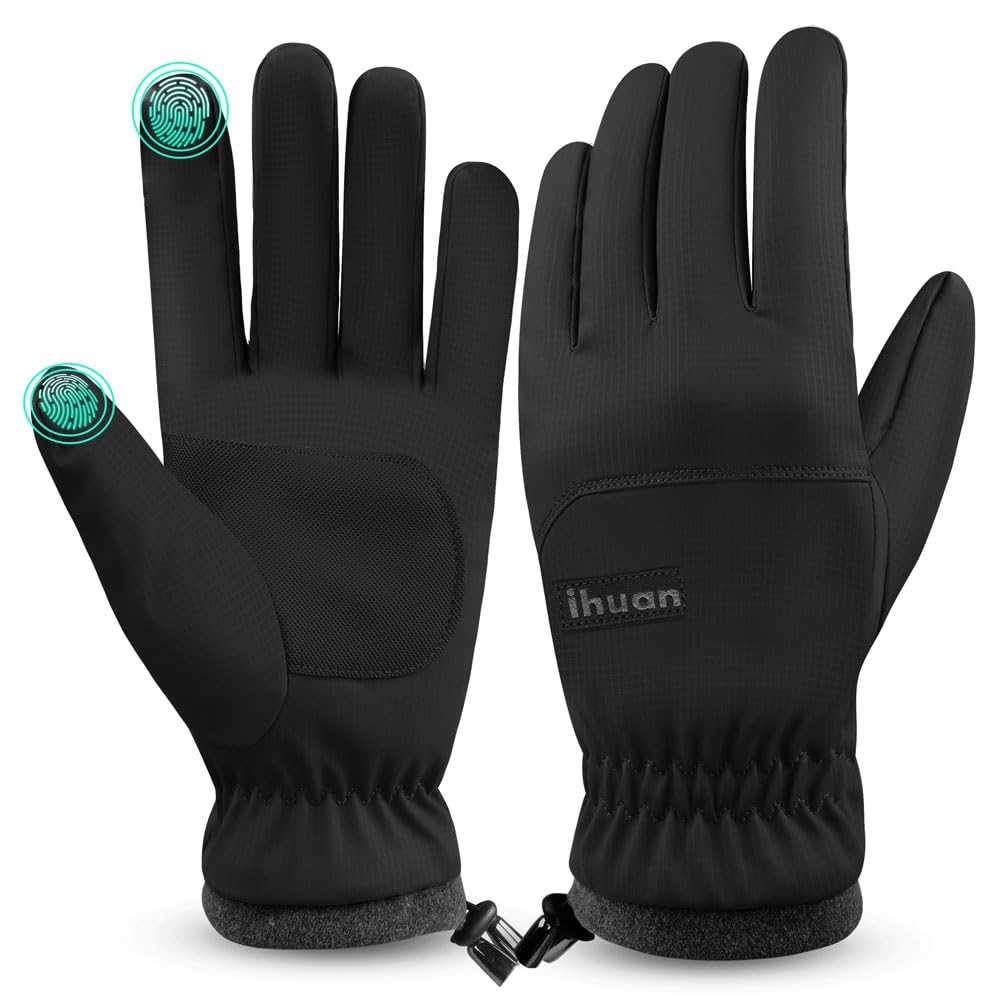
ihuan Ski Gloves

89 /100
Traveler Score Excellent

Key details

Cuff
Adjustable drawstring
Palm
Anti-slip microfiber leather
Lining
Soft fleece
Weight
2.88 oz
Check Details on Amazon

At 2.88 ounces, these are the lightest gloves here by a wide margin, and that's the whole personality of the pair: they vanish into a jacket pocket, the fleece lining is the softest thing in this guide, and there's no break-in period to speak of. They also work with a phone, which is more than the cheapest pair here manages.

Where they stop being a ski glove is the wet. Take the maker's own care note seriously: ihuan states that the fabric around the wrist is not waterproof and asks you not to wear them in heavy rain or submerge them. On a dry, cold day that's irrelevant. In wet snow it's the path water takes to your hands — so this is a cold-morning-in-town glove that can handle a dry resort day, not a storm-day glove.

Sizing runs small, so order up from your usual glove size rather than trusting where the chart's ranges overlap. Do that and you get a glove that weighs nothing, packs flat, and costs less than a lift lunch — the one we keep in the car for the walk from the parking lot to the lodge.

Pros

  • Very light at 2.88 oz
  • Soft fleece lining
  • Anti-slip palm for everyday grip

Cons

  • Thumbs run large even on a correct hand size
Our verdict

Buy it for comfort: the softest, lightest glove here, with a fleece lining you notice the moment you pull it on, and a price that makes a spare pair easy.

Check Latest Price

How We Tested Men's Ski Gloves

We built the shortlist from the gloves that keep turning up in shop aisles and on the mountain — leather gauntlets, synthetic under-cuff styles, and a couple of bulkier insulated pairs — then filtered by insulation type, cuff design, available sizes, and price so the spread ran from entry-level to premium. That left 12 pairs, which we wore for four months, December through March, on resort laps, rope tows, cold morning shoveling, and the kind of wet, heavy snow that finds every seam.

Each pair went through the same rounds. We buckled and unbuckled boots, zipped jacket pockets, opened snack wrappers, and answered texts without taking them off, which told us more about bulk than any spec sheet could. On single-digit mornings we noted which run our fingers went numb on and whether feeling came back on the ride up; on storm days we packed snow against the back of the hand, let it melt, and checked whether the liner stayed dry. Before ordering we measured hand length and width against each brand's size chart, since sizing runs small across this category, and our testers with wide palms and long fingers reported on where seams pressed.

Back at the car and at home, we looked at the unglamorous details: whether the wrist cinch tightened one-handed, whether the gauntlet slid over a jacket cuff without bunching, and how palms and fingertip seams held up after weeks of gripping poles and shovel handles. Every pair dried overnight in the same mudroom, and we noted which liners balled up when we shoved a damp hand back in the next morning. The gloves still warm, dry, and intact in March are the ones that made the list.

How to Choose Ski Gloves for Men

Waterproofing: Membranes, Coatings, and the Cuff

A water-repellent shell is a coating, and it sheds snow for a run or two before it wets out. A membrane — the TPU layer in the Hikentures and the Pixel Pandas — sits behind the fabric and keeps water out even when the outside is soaked, which is what you need where chairlifts are wet or snow falls all day. Sealed seams are the other half of the claim, since unsealed stitching is where a glove leaks first. Then check the wrist: a glove can have a perfect membrane across the hand and an untreated cuff that wicks meltwater down your sleeve, which ihuan says outright about its own pair.

How Much Insulation You Actually Need

Insulation is a trade between warmth and the dexterity you need for buckles, zippers, and pole straps. A mid-weight 3M Thinsulate glove covers most resort days in the teens and twenties. On single-digit days, add a thin liner rather than expecting any one pair here to carry it alone — a liner under a decent glove beats a thicker glove that leaves you fumbling. If you run cold or ski the Rockies in January, buy for warmth and accept the bulk; if you're adjusting gear all day, a lighter glove you can work in wins.

Fit: Measure, Then Size for the Liner

Glove sizes aren't standard across brands, and this group shows it: the Pixel Pandas run small enough that ordering up is routine, while the Hikentures run roomy in the palm on some hands. Measure around your knuckles with a tape and use the maker's chart rather than the size you wear in street gloves. Decide about a liner first — a glove that fits perfectly over a bare hand has nowhere to put one, and a glove that's too tight restricts circulation and leaves your fingers colder than a slightly loose one would.

The Lift-Day Details Worth Paying For

These are the small things that decide whether a glove is pleasant or irritating: a wrist leash so one doesn't drop off the chair, a cuff long enough to sit over your jacket sleeve, a strap you can cinch one-handed, a zip pocket for a pass or a hand warmer, and a palm that grips a pole when it's cold. Touchscreen fabric is worth having if you take photos or check the snow report, but check which fingers it covers — on the Pixel Pandas it's the index fingertip, so the thumb won't work. Grip and cuff first, phone second.

Frequently Asked Questions

Final Verdict

For most men skiing a real season, buy the Hikentures. A waterproof membrane under 3M Thinsulate is the combination that keeps hands dry on a wet chairlift, and the pass pocket, touchscreen tips, and one-year warranty come with it at the same price as the rest of this group. Check the sizing chart first — the palms run roomy.

Ski a few weekends a season and the Tough Outdoors pair does the job for a little less, as long as you can live without a touchscreen. And if your phone is out every run, the Pixel Pandas' wrap-around fingertip panel is worth the size-up.