Best Reef-Safe Sunscreens of 2026

The trouble with reef-safe sunscreen isn't protection—it's whether you'll want to wear it. Mineral formulas have a reputation for going on thick, leaving a ghostly cast, and feeling like a workout to rub in, especially when you're supposed to reapply every two hours, but the category has changed. Over the past six months, my team and I have tested 14 reef-safe sunscreens, from sheer zinc lotions to tinted mineral sticks, on morning runs, pool afternoons, and long beach days. The best ones now disappear into skin, stay put through sweat, and don't make you dread the second coat.

Tricky, since 'reef-safe' isn't a regulated term. Some formulas use non-nano mineral filters; others rely on chemical filters considered less harmful to coral. The label alone won't tell you whether a sunscreen will irritate sensitive skin, sting your eyes, or leave a greasy film, so we looked for broad-spectrum protection that held up in real sun, ingredients that played nice with reactive skin, and fragrance-free options that didn't smell like a tropical cocktail. The picks below are the ones we kept reaching for.

1

Best Overall

Thinkbaby SPF 50+ Sunscreen

93 /100
Traveler Score Outstanding

Key details

SPF
50+
Size
6 oz
Formula
Mineral
Water Resistance
FDA highest rating
Check Details on Amazon

Water resistance is the number that decides a beach sunscreen, and Thinkbaby carries the FDA's highest rating. That's the difference between a formula still working after a morning in the surf and one that has quietly washed off by lunch. Add SPF 50+, a mineral-only formula, and a 6-ounce tube, and you have the bottle we tell families to buy first.

The size is the practical half of the argument. Nobody in a household of four has to ration it, and one tube covers a full beach week where the 3-ounce picks here would be running out by Wednesday. If you're flying carry-on only, decant some into a smaller bottle before you go, because the full tube is well over the liquid limit.

Because the filter is mineral, it starts working as soon as it's on rather than after the 15-minute head start a chemical lotion asks for. It's also the first baby mineral sunscreen to meet Whole Foods' Premium Care requirements, and it's free of PABA, parabens, phthalates, and BPA, which is the label reading parents do in the aisle, already done for you.

What it asks of you is very little: school pickup, the pool, a week at the shore. It's a lotion, so it wants a minute of rubbing, as every mineral formula here does, and it doesn't need a mirror. We still keep a stick in the bag for faces.

Pros

  • FDA's highest water-resistance rating
  • Mineral SPF 50+ for babies and adults
  • Six ounces covers a family without rationing
  • Free of PABA, parabens, phthalates, and BPA

Cons

No notable drawbacks to flag.

Our verdict

Our top pick: it pairs the FDA's highest water-resistance rating with a mineral SPF 50+ formula and a family-size tube, so you reapply generously instead of rationing.

Check Latest Price
2

Best Reef Credentials

Badger Reef Safe SPF 50

90 /100
Traveler Score Outstanding

Key details

SPF
50
Size
2.9 fl oz
Water Resistance
80 minutes
Active Ingredient
Non-nano zinc oxide
Check Details on Amazon

Of everything here, this is the tube with the paper trail. Badger's SPF 50 was the first formula to earn Protect Land + Sea certification, and it's built to comply with both Hawaii's and Mexico's sunscreen rules, which is a more specific claim than the reef-friendly wording most labels settle for and one a dive operator can actually check.

There are four things on the ingredient list: non-nano uncoated zinc oxide, organic sunflower oil, organic beeswax, and sunflower vitamin E. It's 98% organic and NSF certified, and we think the brevity is the point, since this is the shortest list in the guide and the one to hand someone who reacts to everything. We were also impressed by how the beeswax base behaves: it's why the formula holds for 80 minutes of swimming and sweating instead of sliding off in the first set of waves.

That base has a texture cost. The balm comes out firm and needs a few seconds of warming between your palms before it spreads; work it in thin layers rather than one thick one and it settles to a shine that fades rather than a matte finish. On a windy beach with a toddler that's slower going than a lotion, but it's also why it's still there after the third swim.

Pros

  • First formula with Protect Land + Sea certification
  • Four-ingredient, 98% organic formula
  • Holds 80 minutes through swimming and sweating
  • Non-nano zinc with no chemical filters

Cons

  • Highest price per ounce of the lotions here
Our verdict

Buy this when the reef is the reason for the trip: it's the most rigorously certified formula here, and it stays on through a long swim.

Check Latest Price
3

Best Value

Blue Lizard Sensitive SPF 50

89 /100
Traveler Score Excellent

Key details

SPF
50
Size
3 oz
Fragrance
Fragrance-free
Active Ingredients
Zinc oxide, titanium dioxide
Check Details on Amazon

Per ounce, this is the cheapest mineral sunscreen in the guide, and it's also the one with the longest history: Blue Lizard has been a dermatologist recommendation for more than 20 years. That pairing is why it's our value pick, since you get a zinc and titanium dioxide formula at a price that makes generous reapplication realistic.

The formula is fragrance-free, hypoallergenic, and cut with organic aloe, so it doesn't have the tight, drying feel of a bare zinc cream. It's the tube we hand to people who react to everything else, and it's water resistant enough for a full afternoon outside. Sensitive skin is the whole reason this one exists, and it's the version to trust if a chemical lotion has ever left you stinging.

How we use it: it lives by the back door and goes on arms, shoulders, and the backs of legs before a hike or an afternoon of yard work. It's the tube you can afford to be generous with, and generosity is what sun protection actually runs on.

Pros

  • Lowest cost per ounce of the mineral picks
  • Zinc oxide plus titanium dioxide, fragrance-free
  • Trusted by dermatologists for over 20 years
  • Organic aloe soothes instead of drying

Cons

  • Leaves a visible white cast
  • Takes real rubbing to spread evenly
Our verdict

The best value in mineral sun care here: a dermatologist staple that costs the least per ounce and suits the most reactive skin.

Check Latest Price
4

Best for Babies and Toddlers

Baby Bum SPF 50 Lotion

95 /100
Traveler Score Outstanding

Key details

SPF
50
Size
3 oz
Reef Claim
Hawaii 104 Act compliant
Active Ingredient
Zinc oxide
Check Details on Amazon

The age guidance is the first thing to check, and this tube prints it: 6 months and up. That matters more at this stage than any elegance in the texture, and it's why Baby Bum is the one we suggest for a first beach trip. It's a zinc oxide formula that's pediatrician and dermatologist tested, and it's gentle enough that you're not holding your breath.

Coconut oil, shea butter, and cocoa butter do the moisturizing, which is why it feels more like a cream than a paste coming out of the tube. It's also Hawaii 104 Act compliant, made without octinoxate and oxybenzone, and it's unscented, the version of gentle that actually matters in a small car with the windows up.

The 3-ounce size is the travel size, the one that goes in the changing bag or the carry-on rather than the family jug in the trunk. It's a baby formula first, so it isn't the cheapest way to cover a whole household, but for one small person it's exactly right. Give it a moment to settle before the hat goes on.

Pros

  • Labeled for babies 6 months and up
  • Unscented zinc formula for sensitive skin
  • Hawaii 104 compliant, no octinoxate or oxybenzone
  • 3 oz tube fits a diaper bag or carry-on

Cons

  • Leaves a visible cast until fully worked in
Our verdict

Our pick for babies and toddlers: an unscented mineral lotion labeled from 6 months, in a travel tube that lives in the diaper bag.

Check Latest Price
5

Best Stick for Faces

Blue Lizard Kids SPF 50 Stick

93 /100
Traveler Score Outstanding

Key details

SPF
50
Size
0.5 oz
Water Resistance
80 minutes
Active Ingredient
Zinc oxide
Check Details on Amazon

Half an ounce sounds like a mistake until you've tried to put cream on a two-year-old's nose in a parking lot. That's the case for this stick: no dollop, no cream on your hands, no negotiating. Blue Lizard's kids version is zinc oxide only, fragrance-free, and small enough to vanish into a jacket pocket.

It glides and stops where you put it, which is the whole point on a face: a stripe down the nose, a line across each cheek, ears and the back of the neck, done before the protest starts. We were struck by how readily older kids take over the application themselves, and anything that gets a five-year-old to do their own ears earns its shelf space.

Water resistance runs to 80 minutes, so it's a real beach tool rather than a handbag ornament, and it layers over a lotion without pilling. One lives in the stroller pocket and one in the glovebox; of everything here, it's the fastest reapplication we've found.

Pros

  • Zinc oxide only, fragrance-free
  • Applies to a resisting child's face in seconds
  • 80-minute water resistance
  • Small enough for a pocket or purse

Cons

  • Too small to cover a whole body
Our verdict

For faces, especially small ones: a zinc-only stick that goes on in seconds and fits in a pocket, so reapplication actually happens.

Check Latest Price
6

Daily Wear

Babo Botanicals Sheer Zinc SPF 30

92 /100
Traveler Score Outstanding

Key details

SPF
30
Certification
EWG Verified
Water Resistance
80 minutes
Active Ingredient
Non-nano zinc oxide
Check Details on Amazon

SPF 30 isn't a compromise here; it's the reason this one gets worn. As a daily face-and-body lotion, Babo's sheer zinc formula is the lightest thing in this guide that still gives you a mineral filter, and a sunscreen you put on without thinking beats an SPF 50 that stays in the cabinet.

The zinc is non-nano, the formula is fragrance-free and built on jojoba and other certified organic oils, and it carries EWG Verified status, the most demanding third-party screening in this group after Badger's reef certification. It's also 80-minute water and sweat resistant, which is more than most daily lotions bother with.

It goes on easiest over moisturized skin and takes a bit more working straight out of the tube onto a dry face. Patting it on rather than rubbing solves most of that, and it's ready for makeup a minute later. It's also the one here that's easy to put on the back of the neck and the tops of the ears without a mirror.

Where it fits: city trips, spring ski days, an ordinary commute, anything where you want mineral protection without beach-bag weight. For a full day on the water, the SPF 50 picks above are the better call.

Pros

  • Light enough for daily face wear
  • Non-nano zinc with certified organic oils
  • EWG Verified and fragrance-free
  • 80 minutes water and sweat resistant

Cons

  • SPF 30 means more frequent reapplication in strong sun
Our verdict

The one we wear away from the beach: a light, fragrance-free zinc lotion that's easy enough for daily use and EWG Verified.

Check Latest Price
7

Beach-Bag Bulk

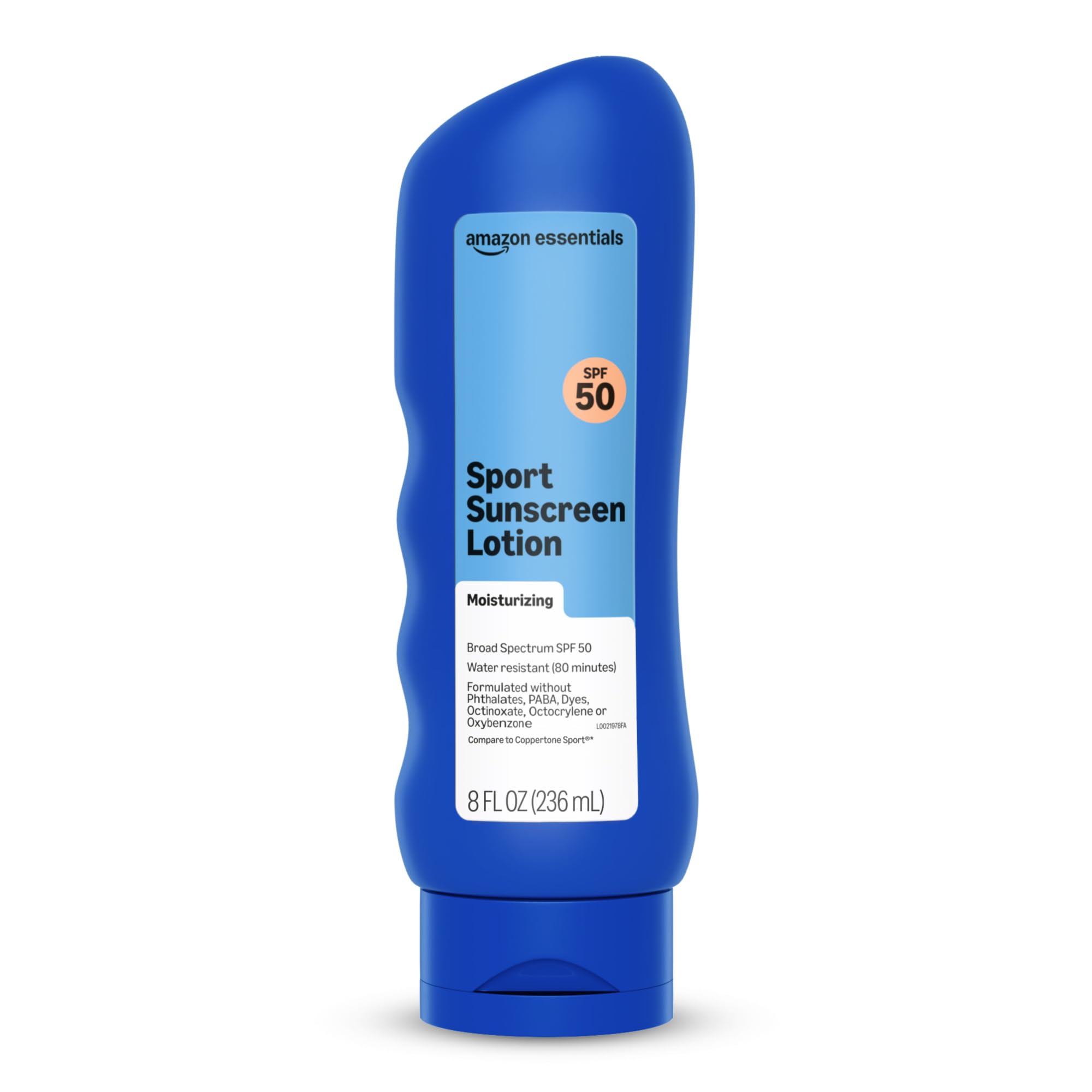
Amazon Essentials Sport SPF 50

91 /100
Traveler Score Outstanding

Key details

SPF
50
Size
8 fl oz
Filter Claim
Free of octinoxate and oxybenzone
Water Resistance
80 minutes
Check Details on Amazon

Eight ounces is the argument. This is the bottle that lives in the beach bag and gets used without a second thought, and if your household goes through sunscreen in a week, that size changes the arithmetic of a trip.

Read the reef claim carefully, though. This is a chemical sunscreen formulated without octinoxate and oxybenzone, the two filters Hawaii's law targets, rather than a mineral one. If reef-safe means zinc or titanium dioxide to you, this isn't it. If it means nothing on the Hawaii list, it qualifies, and it does so at the lowest cost per ounce here by a wide margin.

It's an unscented sport formula with 80 minutes of water resistance, and it's built for the conditions you'd actually throw at it: swimming, sweating, tropical heat, a long day in the sun. Two go in the bag, not one.

Pros

  • Lowest cost per ounce in this guide
  • 8 oz bottle suits a family beach week
  • Free of octinoxate and oxybenzone
  • 80 minutes of water resistance, unscented

Cons

  • Thick lotion takes time to work in
Our verdict

The budget pick: a big, unscented sport bottle free of the two filters Hawaii bans, for the traveler who goes through sunscreen fast.

Check Latest Price

How We Tested Reef-Safe Sunscreen

We began by reading ingredient lists, setting aside any formula with oxybenzone or octinoxate—two filters linked to coral damage—and then narrowed the field by broad-spectrum SPF, water resistance, and cost per ounce. That left 14 sunscreens, including sheer mineral lotions, tinted face sticks, and a couple of hybrid formulas. We didn't care whether a bottle said 'reef-safe' on the front; we cared what was inside and how it performed.

For six months, five testers with different skin tones and sensitivities wore them on morning runs, pool afternoons, a weeklong beach trip, and daily commutes. We applied each one at least three times on separate days, watching how far a nickel-sized blob spread, whether it sank in or sat on top, and how it looked in direct sun. We photographed bare skin and sunscreen-covered skin side by side to compare any white cast, pressed a tissue to our cheeks an hour after application to check greasiness, and kept notes on whether residue rubbed off on phone screens, car headrests, and sunglasses. At the end of each day, we noted any pinkness or burn on exposed skin.

We also paid attention to the things that decide whether you'll actually reapply: how long it took to rub in, whether a stick dragged or a lotion dripped, and whether the formula stayed put through sweat and a towel-dry. Testers with eczema and rosacea reported any stinging, breakouts, or clogged pores, and we flagged every fragrance—even the 'natural' ones—so anyone sensitive to scent could steer clear. Finally, we calculated cost per use based on how much product it took to cover a face and neck, because a bargain bottle that needs four coats isn't a bargain. The formulas that scored highest protected without a ghostly finish, felt comfortable enough for everyday wear, and didn't break the bank.

How to Choose Reef-Safe Sunscreens

What Reef-Safe Actually Certifies

In Hawaii the legal bar is narrow and specific: no oxybenzone and no octinoxate. Plenty of formulas clear it while still being built on other chemical filters, so Hawaii 104 compliant and mineral are two different claims, and only one of them promises zinc or titanium dioxide. If you want the strictest version, look for a mineral active or a third-party certification; Protect Land + Sea, which Badger's SPF 50 carries, is the most specific one in this group.

Decide which you need before you shop. A snorkel week in Hawaii or a resort in Mexico is a certification question. A lake weekend two hours from home is a texture question, and the lighter formula you'll actually reapply wins.

White Cast, Texture, and Whether You'll Wear It

Mineral filters sit on the surface of the skin, which is exactly why they work and exactly why they can look chalky. Non-nano zinc is the usual culprit, and how finely it's dispersed and what it's suspended in makes the difference: a lotion built on sunflower oil or shea butter spreads far clearer than a firm beeswax balm. If you have deeper skin, test on your forearm in daylight before committing to a full tube.

The practical fix is to split the kit rather than hunt for one perfect formula: a stick for noses, ears, and hairlines, a lotion for arms and legs, and a lighter SPF 30 for the face if a 50 feels like too much at seven in the morning.

Water Resistance and Reapplication

Eighty minutes is the ceiling on water resistance in the U.S., so every product here that claims it is telling you the same thing: reapply after a swim, after heavy sweating, and after you towel off. No formula survives a full afternoon in the water on one application, whatever SPF is printed on the front.

Timing differs in a way that matters more than people expect. Thinkbaby's mineral formula protects from the moment it's on; the 15-minute head start printed on chemical lotions doesn't apply. If you're applying in the parking lot before walking onto the sand, that's a real difference.

Format, Size, and Cost per Ounce

Cost per ounce decides whether you reapply generously or ration, and it varies more than SPF does. Blue Lizard's Sensitive tube covers the most skin per dollar of the mineral options here. Sticks cost far more per ounce, but you use a fraction of a gram at a time, so a half-ounce stick reserved for faces can outlast a tube used on legs.

Then match the format to the trip. A stick for faces, a lotion for bodies, and a size that matches how long you're away: a half-ounce stick for a weekend bag, a 6-ounce family tube for a week in a beach house.

Frequently Asked Questions

Final Verdict

Thinkbaby is the one we hand to most travelers: a mineral SPF 50+ that holds its rating in the water and comes in a size a family can use without rationing. If the trip is specifically about the reef, anywhere with rules on the books, Badger's certified formula is the more defensible choice, and the slower application is the price of it. On a budget, Blue Lizard's Sensitive tube is the least expensive mineral option here and still does the job.