Best Kids Hiking Boots of 2026

A kids hiking boot has one job: keep small feet comfortable and sure-footed long enough to reach the good part of the trail. The wrong pair makes itself known fast — a hot spot on the climb, a slip on wet roots, or a boot so stiff your kid refuses to put it on again. What you want is a boot that fits well now with a little room to grow, grips varied ground, and is simple enough for a kid to manage without help.

Over the past six months, my team and I have tested 12 pairs on local trails, muddy park paths, and one memorably soggy camping trip. We watched how they held up, how they felt on small feet, and whether kids liked the look of them enough to actually wear them. One thing I learned: a waterproof boot is only useful if it still flexes — a few of the stiffest pairs kept water out but turned every step into a chore. The picks below are the ones that earned a spot by the door.

1

Best Overall

Merrell Moab 2 Mid WTRPF

91 /100
Traveler Score Outstanding

Key details

Cut
Mid-height
Type
Hiking boot
Waterproofing
Waterproof
Check Details on Amazon

Water is where a kids' hiking boot gets found out. Wet grass, a muddy switchback, a puddle that turns out to be six inches deep — one soaked foot and the walk is over. The Moab 2 Mid is Merrell's waterproof build, and it's the boot we hand over when the forecast is doubtful, because staying dry is the job it does better than anything else in this group.

There's a real hiking boot under the waterproofing, too. The collar sits above the ankle and holds its shape, the rubber outsole has enough give to stay in contact with wet roots and sloped rock instead of skidding off them, and the boot stays put on the foot rather than sliding around inside. On the rocky, wet, muddy ground that undoes cheap boots, this one keeps a kid steady.

Two things to know before you order. The sizing runs on the small side, so measure the foot and go up half a size rather than trusting the number on their school sneakers. And it wants a short break-in, a few walks around the block before a long climb, because it starts firmer than the soft, sneaker-like options here. Neither is a problem if you plan for it; both are miserable to discover at a trailhead.

What settles it is how little the boot asks of the rest of the day. No wet socks, no slipping on a damp descent, no complaints two miles in — that's the whole brief, and this one covers it without becoming a stiff little mountaineering boot. If your hiking is short, dry, and close to home, the budget picks below will do the job. If it involves weather, this is the pair we pack.

Pros

  • Waterproof build keeps feet dry on wet trails
  • Grippy rubber outsole on wet rock and roots
  • Mid-height collar supports the ankle without stiffness

Cons

  • Costs more than the budget boots here
Our verdict

For wet-weather hiking, this is the boot we hand a kid first: genuinely waterproof, grippy on wet rock, and supportive without being heavy — worth the step up in price.
Check Latest Price
2

Best for Kids Who Dress Themselves

KEEN Targhee 4 Mid

88 /100
Traveler Score Excellent

Key details

Cut
Mid-height
Closure
Bungee drawstring
Waterproofing
Waterproof
Check Details on Amazon

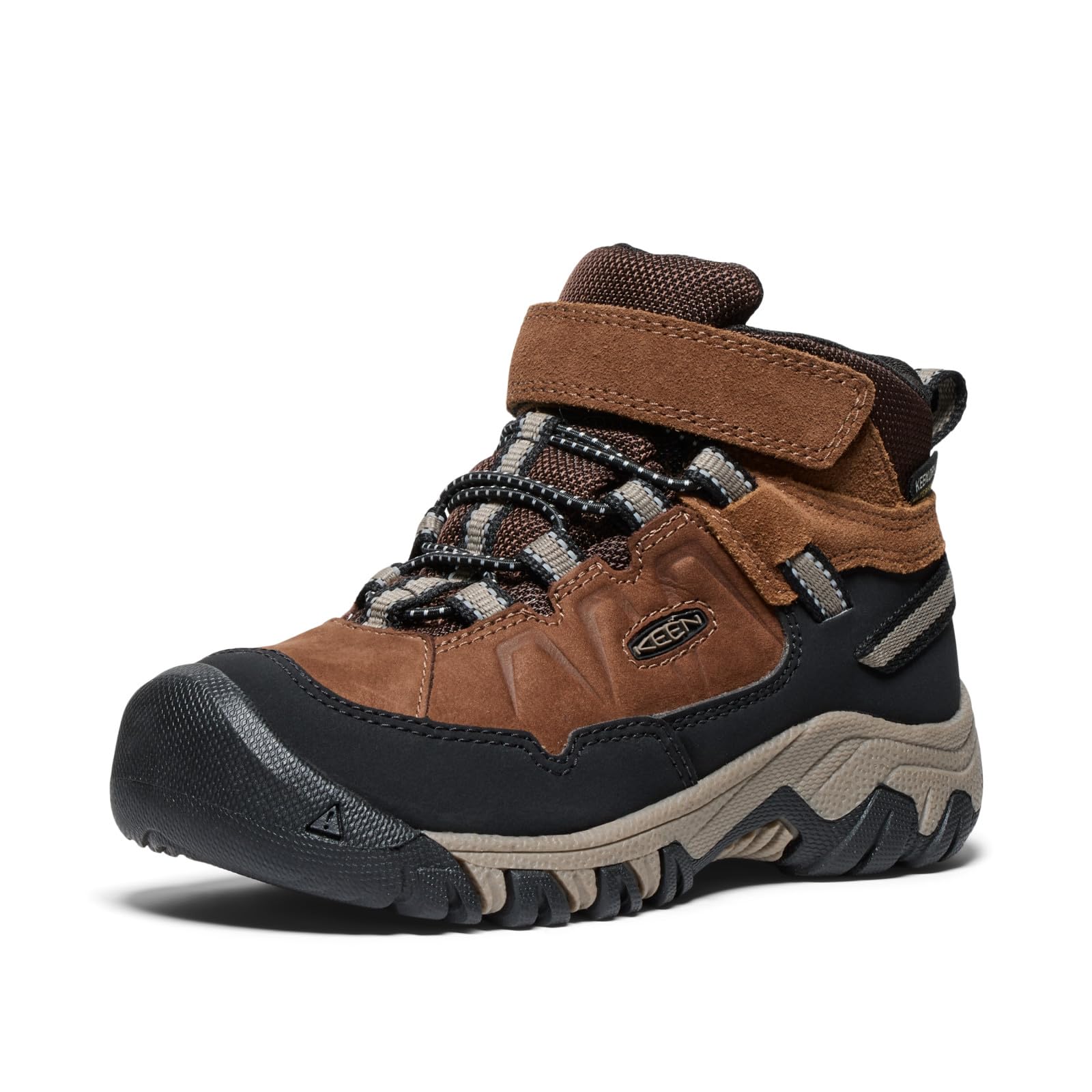
The Targhee 4 is the boot we reach for on the morning when everything is already late and a six-year-old insists on doing their own boots. There are no laces to tie: KEEN uses a bungee cord with a drawstring toggle, so a kid can loosen the whole thing, step in, and pull it snug without help. We think that's worth real money in a house where getting out the door is the hardest part of the hike.

It's a proper boot underneath the clever closure. The collar is padded and high, the sole is stiff enough to protect a foot on rocky ground, and the waterproof build is the reason it belongs in this group at all. Kids work the toggle themselves, it stays where they put it, and nothing comes untied halfway up a hill. The stiffness has a cost: a lighter kid will notice the sole for the first day or two, especially after a season in soft sneakers.

Two things to weigh. It runs about half a size large, so start with the measured size and resist the urge to buy big. And the waterproofing is the least settled part of this boot's record — dry after a wet walk for some kids, not for others — so a hose test in the yard before a cold, wet trip is worth the five minutes. At the top of this group on price, it's the boot for a family that hikes often enough to want it to last.

Pros

  • Bungee closure kids can tighten themselves
  • Padded mid-height collar and protective sole
  • Built to survive a season of hard use

Cons

  • The most expensive boot in this group
  • Water can get through on a long wet walk
Our verdict

Buy this one if your kid wants to gear up alone — the bungee closure is genuinely independent, and there's a supportive waterproof boot underneath it.

Check Latest Price
3

Best Lightweight

Columbia Newton Ridge

89 /100
Traveler Score Excellent

Key details

Type
Kids' hiking boot
Weight
Lightweight
Water Resistance
Water-resistant
Check Details on Amazon

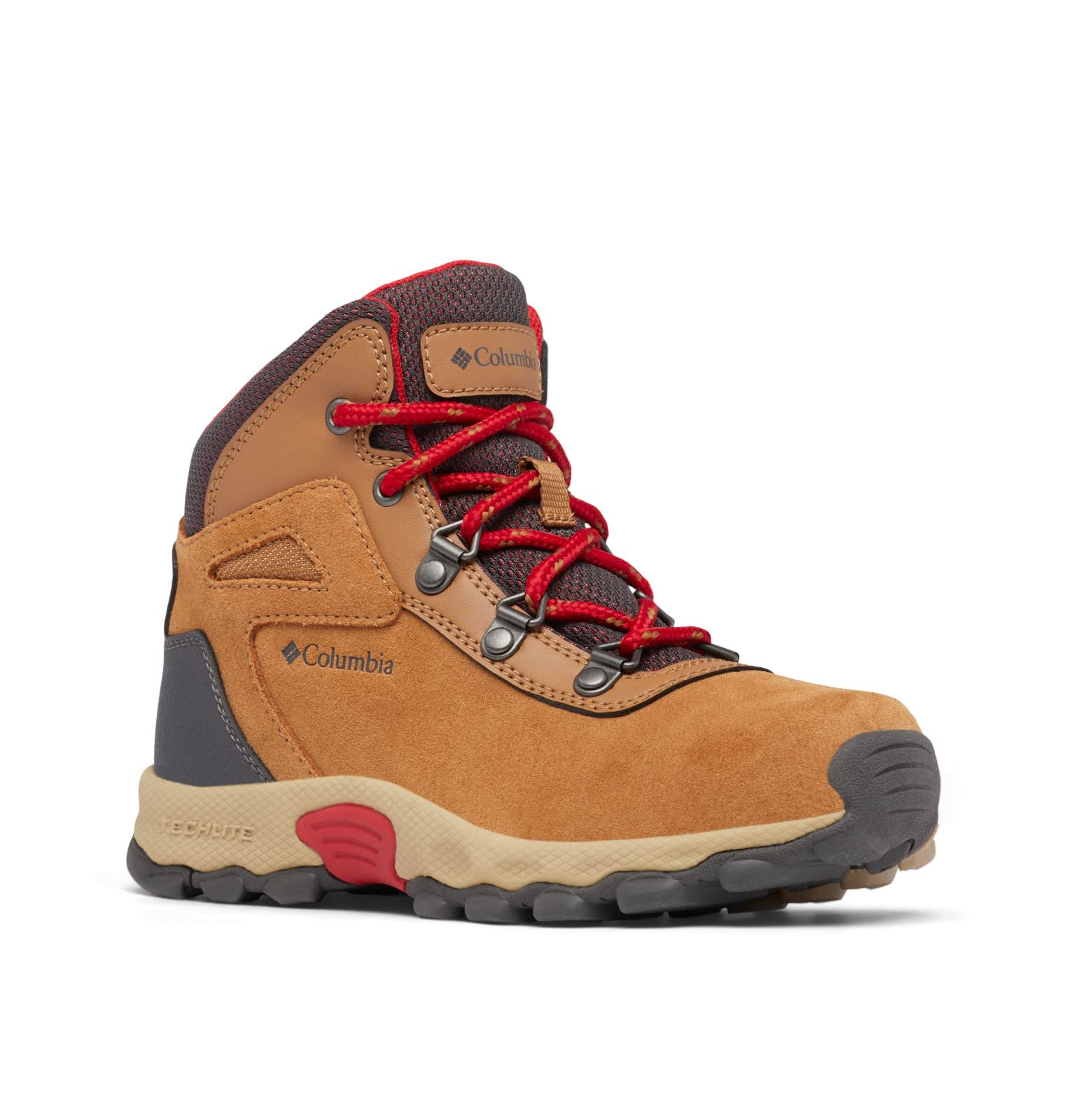
Most kids' boots want a week of short walks before you commit to a real hike. The Newton Ridge doesn't. It's soft from the first wear, with no stiff collar to break down and no hot spot to manage, which is a small thing until you're at a trailhead with a kid who has decided their new boots are too hard.

It's also light for a boot, and that changes how far a kid is willing to walk. The trade-off is protection: this is closer to a trail shoe with a boot collar than a stiff mountain boot, which makes it happiest on maintained paths, gravel, and packed dirt. Water resistance handles rain and wet grass; it is not the boot for a stream crossing.

For day hikes, school runs, and a summer of park trails, that's the right balance, and it's why this is the boot we suggest to families who hike occasionally rather than every weekend. It packs down small enough to live in the car as the spare pair, and it's soft enough that a kid who hates new shoes won't put up a fight. Light, quick, and unremarkable in the best way.

Pros

  • No break-in
  • Light enough for longer walks
  • Water-resistant for rain and wet grass

Cons

  • Snug throat is hard to pull over the arch
Our verdict

A lightweight, no-break-in boot for kids who hike occasionally — soft from day one, easy to live with, and happiest on maintained trails.

Check Latest Price
4

Best for Toddlers

Mishansha Kids Hiking Boots

89 /100
Traveler Score Excellent

Key details

Type
Hiking boot
Sizes
Toddler and kids
Waterproofing
Not waterproof
Check Details on Amazon

If your hiker is still in toddler sizes, the math changes: they'll walk a mile, ride the rest of the way, and outgrow the boots long before the tread wears down. The Mishansha suits that stage. It's soft inside, light on the foot, and easy enough for a small kid to pull on without a fight — and it sits at the bottom of this group on price.

We like it best as a first boot rather than a serious one. The padding is genuinely soft, with no rubbing and no hot spots, and the whole thing flexes with a small foot instead of fighting it. Traction is good enough for gravel paths and packed dirt, which is most of what a toddler hike is. Sizing is the part to slow down for: these run narrow for some kids and inconsistent between pairs, so measure the foot and check the return policy before a trip. What you're buying is a comfortable, light, cheap boot for gentle trails, and for one season that's plenty.

Pros

  • Soft padding with no rubbing
  • Light and easy to pull on independently
  • Inexpensive enough to replace each season

Cons

  • Not waterproof
  • Soles and seams wear out under daily use
Our verdict

The one we suggest for toddlers and gentle trails: soft, light, inexpensive, and easy for little kids to pull on themselves.

Check Latest Price
5

Best Budget

Northside Kids Hiking Boots

90 /100
Traveler Score Outstanding

Key details

Upper
Synthetic suede and rip-stop
Insole
Cushioned EVA
Outsole
TPR traction
Check Details on Amazon

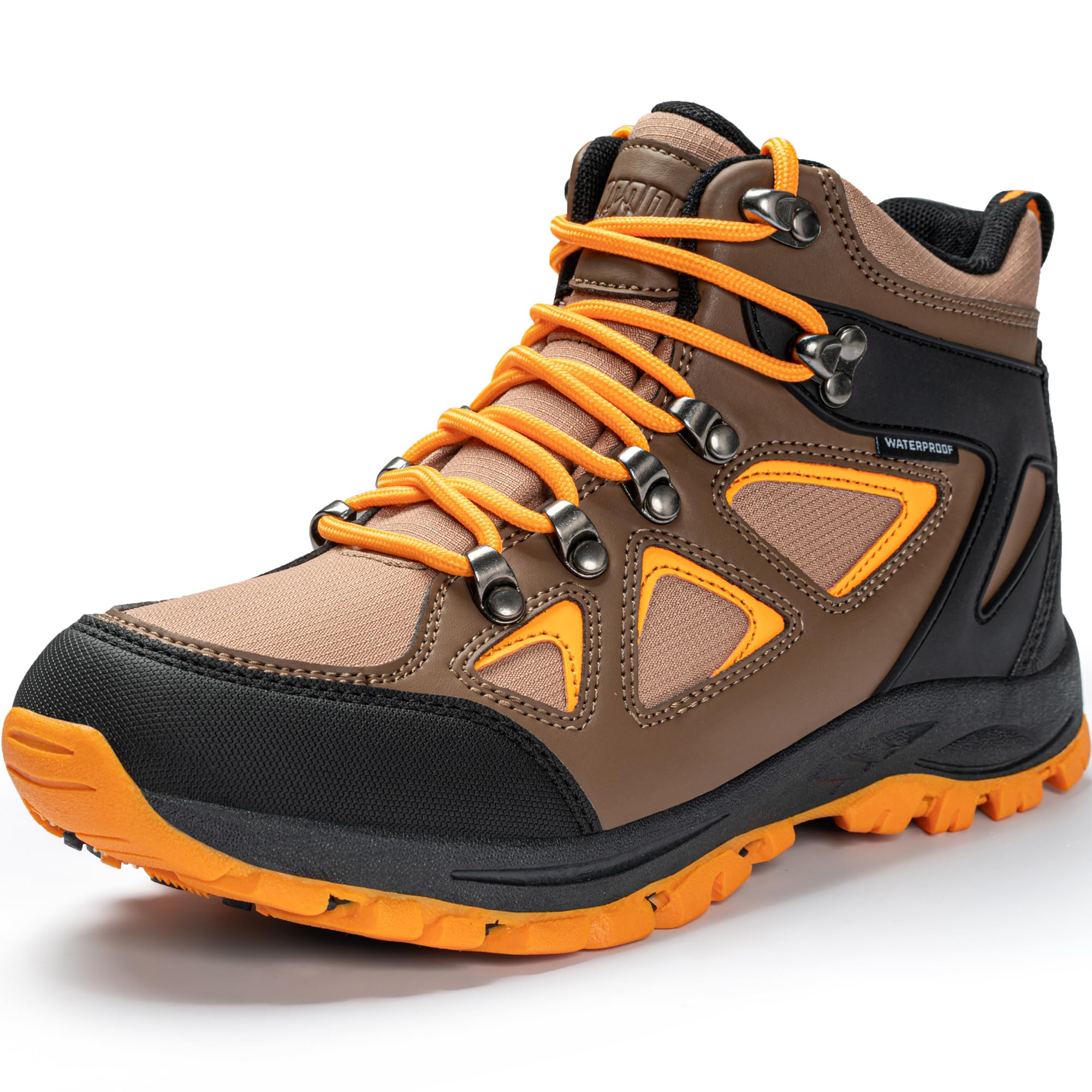
Synthetic suede, rip-stop panels, a cushioned EVA insole, and a TPR traction outsole: on paper, the Northside reads like a boot that costs more than it does. That's the appeal. Where several budget boots here look like sneakers with a tall collar, this one is built like a hiking boot, and it's the least expensive way in this group to get that.

The fit is the part we kept noticing. There's room at the toe without the heel lifting, which is the combination that keeps a kid steady on uneven ground, and the cushioned insole means a second hour of walking doesn't turn into a negotiation. It's a plain boot, but it's put together like one that expects to be used.

Value is where this boot makes its case. It does the core job — ankle coverage, a sole with actual grip, room for toes — for less than the branded picks, and it does it without the flimsy feel that usually comes with the price. If your kid's hiking season is a string of muddy Saturdays and a summer camp that eats shoes, this is the pair we hand over.

Pros

  • Real hiking-boot build at a budget price
  • Roomy toe with a secure heel
  • Cushioned insole and grippy TPR outsole

Cons

  • Lace hooks can snap early
Our verdict

The best value here: a proper hiking boot with a cushioned insole and a grippy TPR sole for less than the big names.

Check Latest Price
6

Ankle Support

R CORD Kids Hiking Boots

89 /100
Traveler Score Excellent

Key details

Closure
Lace-up
Outsole
TPR traction
Waterproofing
Waterproof
Check Details on Amazon

The collar is what stands out on the R CORD: padded, high enough to wrap the ankle properly, and firm enough to hold its shape when a kid leans into a turn. Plenty of kids' boots have a collar that's mostly decoration. This one supports, and the difference between that and a low shoe on a rocky descent is the difference between a confident kid and a held hand. That's why it stays on our list at the bottom of the price range.

The rest is a mixed bag in the way budget boots usually are. The fit runs true and the look gets worn with pride rather than negotiated over, which is more than you can say for every boot in this group. Water is the weak spot: the waterproofing advertised in the name doesn't survive a genuinely wet hike, so treat this as a dry-weather boot and watch the forecast before a big day out. For the money, solid support on dry trails is a fair trade to make.

Pros

  • Padded collar gives genuine ankle support
  • True-to-size fit
  • A look kids ask to wear

Cons

  • Water gets through on a genuinely wet hike
Our verdict

Buy it for the ankle support at a low price and keep it for dry trails — the collar is the real thing, the waterproofing isn't.

Check Latest Price
7

Cold, Wet Days

DREAM PAIRS Boys Boots

90 /100
Traveler Score Outstanding

Key details

Type
Outdoor boot
Lining
Fleece
Waterproofing
Waterproof
Check Details on Amazon

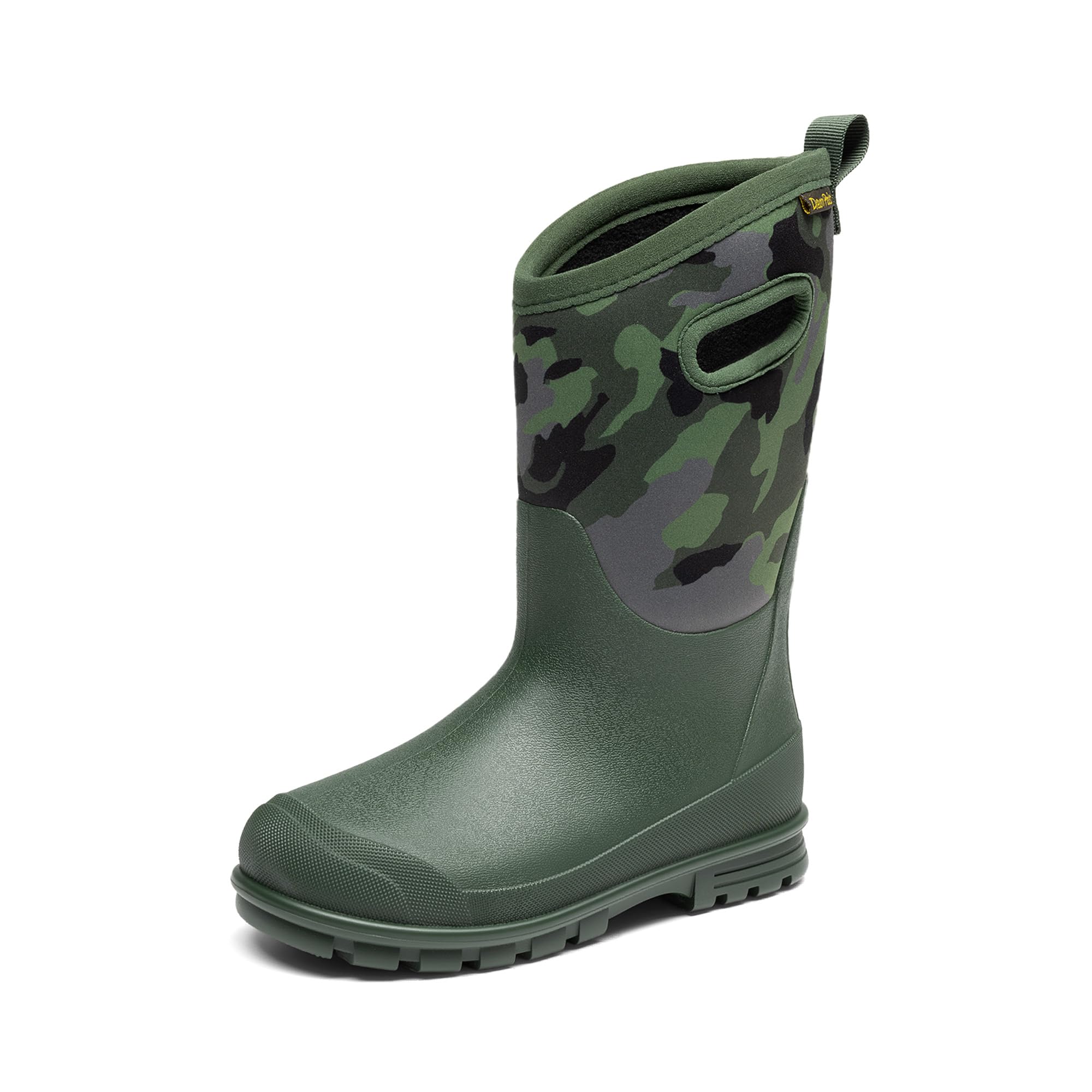
Some kids' boots are for summer switchbacks and some are for the walk to school in February. The DREAM PAIRS is squarely the second kind: fleece-lined, warm, sold as waterproof, and fitted with pull handles at the top so a kid can haul them on over thick socks. Think farm chores, snowy sidewalks, and a January walk through the woods.

For cold-weather wandering it's a good, cheap boot — warm, comfortable, true to size, and wide enough to take thick socks without pinching. What it isn't is a technical hiker: the tread handles wet pavement and muddy paths rather than rock, the fleece is too warm for summer, and water can still find its way in on a long soaking. Keep a proper trail boot for the summer trips and use this one for everything cold and wet.

Pros

  • Fleece lining keeps feet warm
  • Pull handles make them easy to get on
  • Wide enough for thick socks

Cons

  • Fleece lining is too warm for summer trails
  • Water can get through on a long soaking
Our verdict

A warm, cheap, pull-on winter boot for cold-weather play — not a summer hiker, and not the pair for a soaking wet trail.

Check Latest Price

How We Chose and Tested the Best Kids Hiking Boots

We started by combing through reviews and spec sheets for more than 40 pairs, then narrowed the list to 12 based on size range, price, and whether each boot was built for trail use rather than the playground. For six months, those 12 pairs rotated among four families with kids ages 5 to 10. They came on weekend hikes, daily walks to school, muddy park loops after rain, and a two-night camping trip.

Fit came first: we checked heel hold with a thumb behind the heel, pressed the toe box for wiggle room, and had kids walk up and down stairs. After each hike, we asked about hot spots and looked for redness. On wet, rooty slopes, we watched for slips and noted how the tread handled slick rock and loose dirt. For water resistance, kids walked through shallow puddles and wet grass, then we felt inside for dampness.

We inspected toe caps and seams after scuffs, repeated wear, and the usual kid abuse. Ease of use mattered more than I expected: we timed how long kids took to put the boots on and take them off, and watched whether laces stayed tied or needed double knots; toggle laces were faster for younger kids. We also noted which pairs kids liked the look of, because a boot they won't wear is money wasted. Then we compared price against how the boots held up and how long a child could realistically wear them before outgrowing them.

How to Choose Kids Hiking Boots

Start With How Wet Your Hiking Gets

Waterproofing is the biggest price jump in this category, and it helps to know what you're paying for. A waterproof boot has a membrane that keeps water out; a water-resistant one has a treated upper that shrugs off drizzle and wet grass but gives up in a puddle; an untreated budget boot soaks through. All of them stop working at the collar, so a kid who wades ankle-deep gets wet either way.

If your hiking is dry summer paths, save the money and pack spare socks. If you hike in the shoulder season or anywhere with mud, pay for the membrane — the Merrell Moab 2 Mid is the waterproof pick here, and the Mishansha is the one that soaks through. A soaked boot also takes a day to dry, which matters on a multi-day trip.

Fit the Foot You Have Now

Buying a size up to grow into is the most common mistake in kids' boots. A boot that's too long lets the heel lift with every step, and a lifting heel means blisters on the climb and a turned ankle on the descent. Measure the foot at the end of the day, with the socks they'll hike in, and leave about a thumb's width at the toe.

Sizing swings between these boots — the Moab 2 runs small, the KEEN Targhee 4 runs about half a size large — so use the specific model's guidance instead of the size of their school sneakers. If your kid is between sizes, fit the smaller foot and check the return window before a trip.

Sole and Ankle: Match the Boot to the Ground

A lugged rubber outsole is what keeps a kid upright on wet roots; a smooth fashion sole is what puts them on the ground. Beyond tread, stiffer soles protect feet on rock and soften nothing on pavement, while softer soles are comfortable on paths and vague on a boulder field. Gravel and packed dirt suit a lighter, softer boot like the Columbia Newton Ridge; rocky ground argues for structure.

Ankle height helps, but a tall collar on a boot that flexes is decoration. Look for a collar that's padded and holds its shape when you press it — the R CORD is the clearest example here of a budget boot getting that right.

Closures and Hardware: What Still Works in Month Three

Laces give the most adjustable fit, but they're slow and many kids can't tie them well until seven or eight. Bungee cords and hook-and-loop straps trade a little precision for independence — the KEEN Targhee 4's drawstring is the reason we recommend it for kids who dress themselves. Whichever you choose, check the hardware, because lace hooks and eyelets are the first thing to break on a cheap boot.

A wide throat and a pull handle make a difference on cold mornings, but a snug opening is the one flaw you can't fix later. If a boot is hard to get over the arch in the shop or the hallway, it will be hard every single day.

Frequently Asked Questions

Final Verdict

The Merrell Moab 2 Mid is the boot we hand a kid when the plan involves weather: waterproof, grippy on wet rock, and supportive without turning into a heavy little mountaineering boot.

If your hiking is mostly dry, light, and close to home, the Columbia Newton Ridge is the easier boot to live with, and the Northside does the same core job for less. Buy for the trails you actually walk.