Best Down Jackets for Backpacking of 2026

The best down jacket for backpacking is the one you forget you’re carrying until the temperature drops, and then it’s the only thing you want. The trick is finding warmth without a sleeping-bag-sized bundle, a shell thin enough to save weight but not so thin it snags on every branch, and seams that keep feathers inside instead of migrating into your fleece. I’ve had jackets that felt great in the shop and then ran small with a midlayer, leaked quills at the shoulders, or turned clammy on a climb—small failures that add up over a long day. The right one fixes all that: warm at camp, comfortable on the move, sized for layers, and still sharp enough to wear into town.

We tested ten jackets over eight months on weekend trips, comparing warmth, fit, comfort, durability, build quality, and value rather than just specs. Some are better for cold sleepers, some for broad shoulders, and one is the clear budget pick.

1

Best Overall

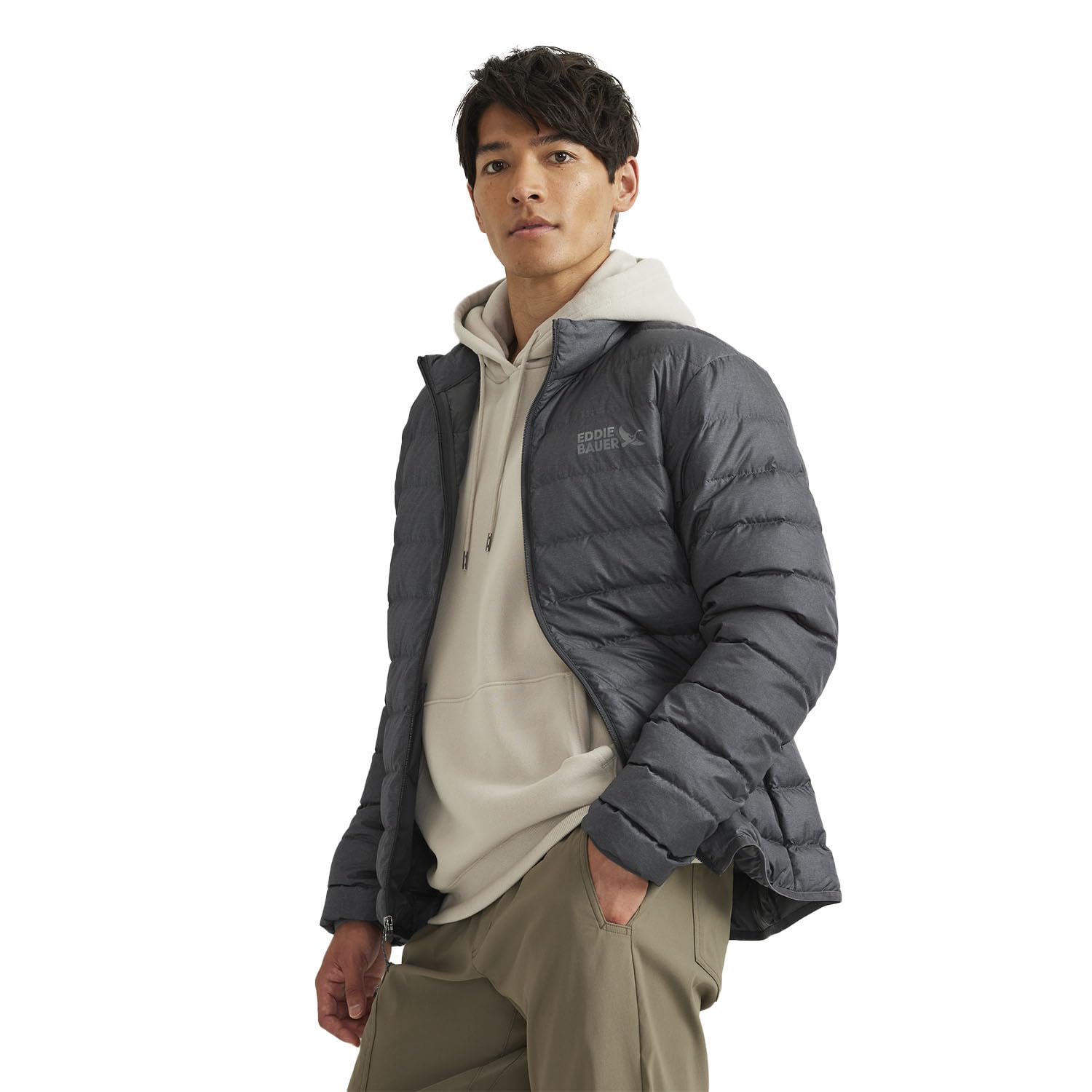
Eddie Bauer CirrusLite

91 /100
Traveler Score Outstanding

Key details

Fit
Men's
Pockets
Two zippered hand, two interior
Listed Weight
7.83 oz
Check Details on Amazon

Just under eight ounces, according to the listing, is most of the argument for the CirrusLite. That is less than a full water bottle, and it is why this is the jacket that stays in the pack on every trip instead of the one left at home because it takes up too much room. It is a genuine down jacket rather than a synthetic puffer, and it is the lowest-priced one here, which changes how you use it: you stop treating it as the good jacket and start treating it as gear.

Warmth is the pleasant surprise. Over a fleece it handles frosty mornings and cold evenings at camp, and over a t-shirt it is a cool-morning layer — the range a three-season backpacker actually needs, which means it can be the only insulation in the pack from July through early fall. We also rate the storage: two zippered hand pockets plus two interior drop pockets is more organization than most jackets at this weight bother with.

Eight ounces has to come from somewhere, and it comes from the shell, which is thin enough that down works its way through the seams — expect a few small quills on the shirt underneath, especially early on. A stuff sack keeps that contained and keeps the loose down off your sleeping bag. Treat it as a midlayer, too: it is at its best over a fleece on a cold morning, and it is not the jacket to bring on a genuine winter trip.

Pros

  • Listed at 7.83 ounces, the lightest here
  • Real down at the lowest price in the group
  • Two zippered hand pockets plus two interior pockets

Cons

  • Thin shell snags and tears easily
Our verdict

The CirrusLite is the jacket we point most backpackers to first: under eight ounces on the listing, real down, and the lowest price here.

Check Latest Price
2

Best for Cold Trips

Marmot Guides Down Hoody

89 /100
Traveler Score Excellent

Key details

Fit
Men's
Hood
Yes
Pockets
Zippered chest and handwarmer pockets
Check Details on Amazon

Shoulder-season backpacking asks a different question than a July trip does. You want loft, a hood you can pull over a beanie, and enough shell to stop the wind, and you accept the weight that comes with all three. The Guides Down Hoody is the jacket in this group built for that trip.

Warmth is the reason to carry it. Of the four here, this is the one we trust when the forecast drops below freezing, and it manages that without the stiffness of a parka — there is room for a fleece underneath, and the hood is big enough to go over a hat without dragging on your head. Fleece-lined handwarmer pockets are a small thing that stops being small at a cold, early start.

What that costs you is money and a little simplicity. It is the most expensive jacket here by a clear margin, and on a summer trip that premium buys warmth you will not use. Marmot also publishes neither a weight nor a fill power for this jacket, which is genuinely annoying when you are counting grams — the Eddie Bauer tells you exactly what it weighs and this one leaves you guessing.

Those are the terms, and for a cold trip they are easy to accept. If you are packing for frost, the extra loft and the usable hood matter more than the ounces or the price, and this is the one that comes out of the pack first at camp.

Pros

  • Warmest jacket in this group
  • Roomy hood that fits over a hat
  • Fleece-lined handwarmer pockets and zippered chest pockets
  • Light for the warmth it delivers

Cons

  • Premium price compared with the rest of the group
Our verdict

When a trip runs cold, we take the Guides Down Hoody: the warmest jacket in this group, with a hood that fits over a hat and a price that reflects it.

Check Latest Price
3

Best Women's Pick

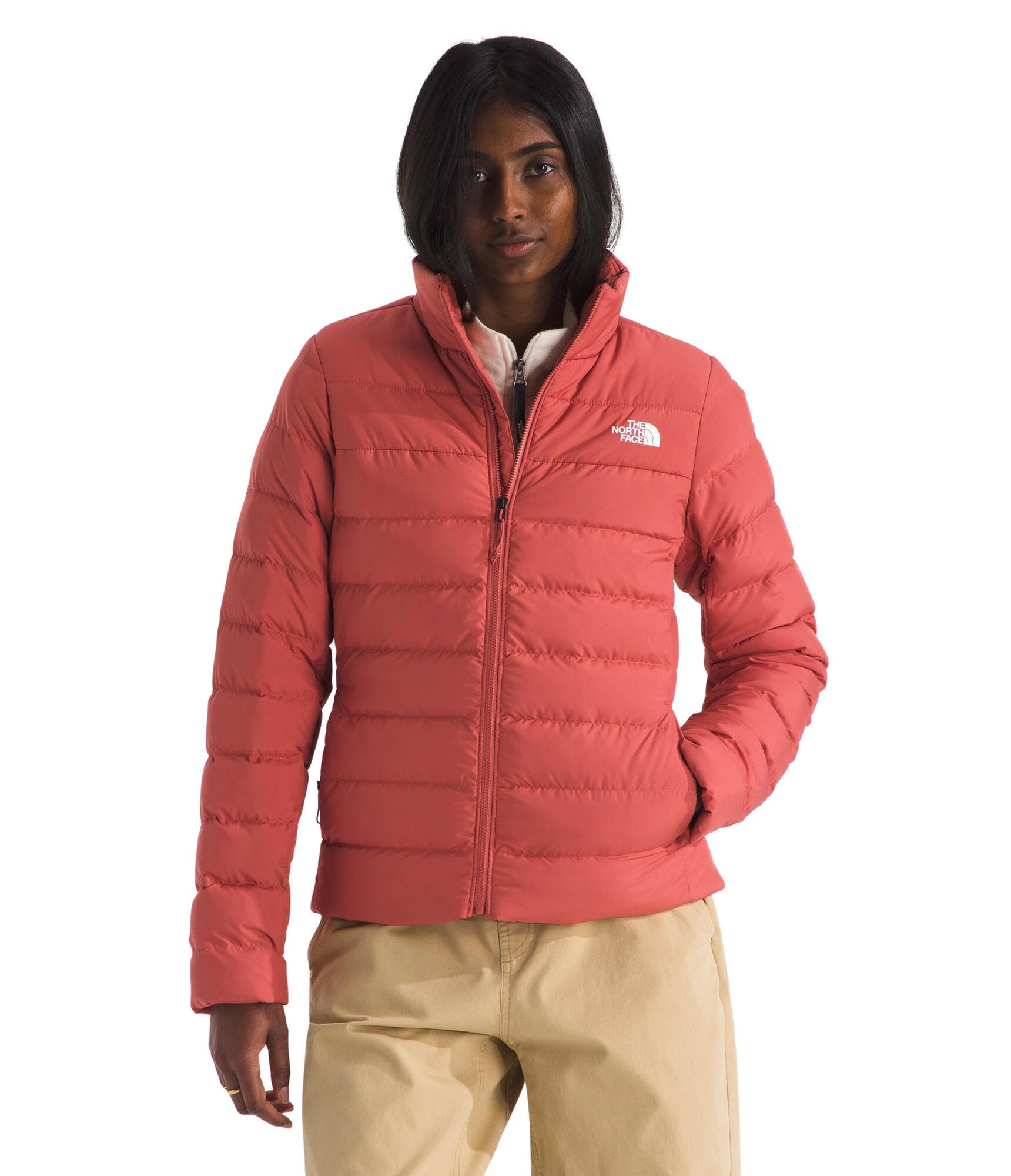
North Face Aconcagua 3

88 /100
Traveler Score Excellent

Key details

Fit
Women's regular
Insulation
600-fill down and recycled polyester blend
Back Length
27.75 inches
Listed Weight
2 lb
Check Details on Amazon

Wind and drizzle are what the Aconcagua 3 is built for, and it is the jacket here we trust most in them. WindWall fabric shuts down the gust that cuts straight through a plain down layer, and the non-PFC durable water-repellent finish sheds the sort of light rain that soaks a shell-less puffer. That is why it is our women's pick in this group.

The construction explains why it is the heaviest jacket here. It pairs 600-fill recycled waterfowl down with recycled polyester sheet insulation in a 50/50 blend, zoned where moisture lands first, and the synthetic share keeps insulating in the damp that flattens pure down. The 27.75-inch back length covers your hips, which you notice on a windy ridge, and the whole thing is machine washable.

Sizing is the part to get right. The cut is close enough through the shoulders that a midweight fleece underneath makes it snug, so if you plan to layer, go up a size rather than trusting the true-to-size note. Confirm the hood on the colorway you order, too — the listing describes a hooded collar, and it is worth checking the photos if a hood is non-negotiable for you.

Pros

  • 600-fill down blended with zoned synthetic insulation
  • Windproof fabric with a non-PFC water-repellent finish
  • Machine washable, with a hip-covering 27.75-inch back

Cons

  • Listed at 2 pounds, heavy for a carried layer
  • Premium price relative to the group
Our verdict

For women who want one jacket for windy, damp cold, the Aconcagua 3 earns its place — the windproofing and water-repellent finish do real work, so size it for layering.

Check Latest Price
4

Mild-Weather Trips

Columbia Lake 22

87 /100
Traveler Score Excellent

Key details

Fit
Men's
Insulation
Down
Model Number
1864582
Check Details on Amazon

Set the Lake 22 next to the CirrusLite and you are looking at the same idea: a light down jacket that lives in the pack and comes out at dinner. The difference is warmth. This one reads as a milder-weather layer — good over a sweater when the day tops out in the fifties, thin once the temperature heads toward freezing.

What it does well is behave like a jacket you do not have to think about. It is light, it layers under a shell without bunching at the shoulders, and it dries quickly when you are caught in drizzle without a rain layer on. The fit is straightforward and the price sits close enough to the top pick that cost should not decide it for you.

Where it lands in this group is behind the CirrusLite, on three counts: listed weight, price, and how much warmth you get for either. The Lake 22 is a good jacket standing next to a better one. If Columbia's cut suits your shoulders better than Eddie Bauer's does, that is a real reason to pick it — a jacket that fits properly is warmer than one that does not.

Pros

  • Light enough to forget inside a pack
  • Warm over a sweater in mild weather
  • Dries quickly when caught in drizzle

Cons

  • Warmth runs out as temperatures head toward freezing
Our verdict

The Lake 22 is a sensible light down layer for mild trips, and we rate it — just not above the CirrusLite, which is lighter and cheaper.

Check Latest Price

How We Tested Down Jackets for Backpacking

We started with a shortlist built from manufacturer specs—fill power, total weight, shell fabric, and packed size—then cut anything that looked too heavy for its warmth or too delicate for shoulder straps. That left ten jackets, which we tested over eight months on weekend backpacking trips and a few cold-weather day hikes. I wore each one at camp from sunset until bedtime, hiked uphill in it when the morning was still brisk, and stuffed it back into its own pocket or stuff sack at least a dozen times per trip.

On the trail, I paid attention to the things a spec sheet hides. I checked whether the shell snagged on branches, whether pack straps polished the shoulders, and whether down worked its way through seams or poked out at cuffs after repeated stuffing. I noted where the jacket felt tight across the back with a pack on, whether sleeves stayed put when I reached overhead, and whether the hem covered my waist when I bent over. For fit and sizing, I layered each jacket over a base layer and a fleece, then under a rain shell; if it only worked with one combination, I marked it down.

Warmth got judged in the cold, not on a label: I wore each jacket on exposed ridges and at damp campsites, noting whether I needed an extra fleece or was comfortable standing still. Back in town, I wore the same jackets for errands and casual evenings to see whether the cut looked as good with jeans as it did with hiking pants. At the end, we compared zippers, baffle stitching, and seam construction against price—value wasn’t the cheapest jacket, but the one that still looked and performed like new after eight months.

How to Choose Down Jackets for Backpacking

Weight Is the First Number, and It Needs Reading

Ounces compound over a trip, and they compound fastest in the layer you carry for evenings rather than wear all day. The spread in this group is wide: the CirrusLite is listed at 7.83 ounces, the Aconcagua 3 at two pounds, and that gap decides which jacket suits a long walk-in rather than a short one.

There is a trap in the number itself. A weight field on a listing is not always the garment's weight — if it reads as package or shipping weight, subtract the packaging before you count grams, and weigh the jacket yourself when it lands. Packed volume deserves the same suspicion: a jacket that fills the top of a 40-liter pack costs you more than its ounces do.

Match Warmth to the Trip You Actually Take

Every jacket here is a down layer, but they are not interchangeable. A light one is a midlayer, at its best over a fleece on a cold morning and not enough on its own below freezing. A loftier hooded jacket like the Marmot Guides Down moves toward being the thing you wear all evening at camp.

The trap is buying for the worst night you can imagine. A layer you sweat in on the climb is worse than a thinner one you can vent, so buy for the trip you take most often and add a warmer midlayer for the exceptions.

Fit, Hem Length, and the Zipper

Fit is a layering decision before it is a style one. You want room across the shoulders for a fleece, a hem that stays put when you reach for a pack strap, and a back length that covers your waistband when you bend over. If the cut is described as close, sizing up costs you a little loft and nothing else.

Then work the zipper with gloves on. A closure failure is what turns a warm layer into dead weight at the worst possible moment, and it is the part of a budget jacket that gets the least attention in the listing.

What the Extra Money Buys

Price in this category tracks the fill, the shell, and the detailing. At the low end you get real down, a thin shell, and a jacket you will not fuss over. Higher up you get a down-and-synthetic blend, windproofing, a water-repellent finish, and a longer hem. We think the budget end covers most three-season backpacking, and the premium is worth paying only when your trips are regularly cold, exposed, or wet. If you hike mostly in summer, spend the difference on a better sleeping pad.

Frequently Asked Questions

Final Verdict

Four jackets, one clear answer for most backpacking trips: the Eddie Bauer CirrusLite. It is the lightest jacket in this group, it is real down, it is the cheapest of the four, and over a fleece it covers everything from alpine starts to October evenings. It is the layer we pack without debating it.

Change the trip and the answer changes. For frost and shoulder-season weather, the Marmot Guides Down Hoody's loft and hood justify the premium. For women who want wind and rain handled without a shell, the Aconcagua 3 does the most work — size up if you layer. And the Lake 22 is a sound mild-weather choice when its cut suits you better than the CirrusLite's.