Best Climbing Chalk Bags of 2026

You're three moves from the top, fingers sweating, and you reach for chalk—only to fumble with a drawstring that won't budge. I've been there, and it's the fastest way to pump out. A good chalk bag isn't just a pouch; it keeps chalk dry and accessible, stays put on your waist or harness, and has pockets for tape and a snack without turning into a bulky mess. The best ones disappear on your harness—until you need them.

Over the past three months, we put 15 chalk bags through gym sessions and outdoor crag days, and the differences came down to closure, fit, and how they held up. The worst left chalk dust in my car and a drawstring that jammed every time; the best justified their price with thoughtful pockets and stitching that didn't fray. Below are the ones that earned a spot on our harness.

1

Best Overall

Old Blue Chalk Bag

92 /100
Traveler Score Outstanding

Key details

Belt
Adjustable quick-clip belt
Weight
3.99 oz
Closure
Drawstring
Pockets
2 large zippered
Check Details on Amazon

The stiffened rim is what we notice first, because it keeps the bag open while you chalk up with one hand. That detail, plus the adjustable quick-clip belt and small carabiner, is why the Old Blue is our top pick for most climbers. It is light enough to forget on a harness, but the 5-by-5-by-7-inch body still has room for a full hand and two large zippered pockets.

The nylon shell is listed as waterproof, and the fleece lining is soft against chalky fingers. We appreciate the two zip pockets for a phone, keys, or a strip of tape, and the quick-clip belt is easier to adjust than a plain webbing strap. The bag also holds its shape on the ground instead of flopping over, which makes it less likely to tip when you set it down between burns.

For gym sessions and sport climbing, the layout is close to ideal: the opening is wide, the closure pulls across the top, and the belt keeps the bag on your hip when you move. Compared with the Noborou, you give up the removable belt. What you get instead is a simpler bag that is easy to live with and light enough to leave on all session.

The drawstring is the part to treat with care. Pull both sides evenly and check the gap before the bag goes into a pack; a rushed cinch can leave a small opening. That is a small habit, not a reason to skip the bag, and it is the one handling note we attach to an otherwise straightforward recommendation.

Pros

  • Stiffened rim keeps the mouth open
  • Two large zip pockets for phone and keys
  • Adjustable quick-clip belt and carabiner
  • Light 113 g body

Cons

  • Chalk sold separately
Our verdict

For most climbers, this is the wearable bag we recommend: a secure belt, a wide opening, and two zip pockets make it an easy everyday choice.

Check Latest Price
2

Best All-In-One Bundle

Survivor Chalk Bag Bundle

93 /100
Traveler Score Outstanding

Key details

Closure
Drawstring
Pockets
2 zippered
Included
Chalk ball + liquid chalk
Dimensions
5.12"L x 5.12"W x 6.3"H
Check Details on Amazon

The included chalk ball and bottle of liquid chalk are what make the Survivor feel like a starter kit rather than just another pouch. We like that the bag arrives ready to use: the chalk sock is pre-filled, the liquid chalk gives you a second option on dry skin, and the drawstring top keeps the dust inside between attempts.

We recommend it to a new climber, a gift buyer, or anyone who wants the chalk sorted in one purchase. The bag has two zippered pockets, a brush holder, and a structured body that stands up on the gym floor. Its 5.12-inch footprint is compact, so it packs easily; just check the mouth if you have large hands, because this is a smaller bag than the Old Blue.

The two pockets are genuinely useful for keys, cards, and a small tape roll, and the topo-map print gives the bag more personality than the usual black nylon. If you already own chalk and want a more flexible everyday bag, the Old Blue is the cleaner choice. The Survivor makes more sense when the bundle is the point or when you want a bag that can stand on the mat while you chalk up.

Pros

  • Chalk ball and liquid chalk included
  • Two zippered pockets and brush holder
  • Structured body stands up on the floor

Cons

  • Pockets are tight for larger phones
Our verdict

We recommend it to anyone who wants the chalk sorted in one purchase, with a useful bag and starter chalk included.

Check Latest Price
3

Best Budget

Sukoa Chalk Bag

92 /100
Traveler Score Outstanding

Key details

Belt
Adjustable to 40 inches
Weight
2.4 oz
Closure
Drawstring
Pockets
2 large zippered
Check Details on Amazon

The two large zippered pockets are the reason to look at the Sukoa. They turn a basic chalk bag into a small gym organizer, with room for keys, cards, earbuds, and a smaller phone, and the quick-clip belt extends to 40 inches so it fits over a hoodie or a light jacket.

We recommend it as a budget pick for gym climbers who carry more than chalk. The 900D polyester shell is water-resistant, the fleece lining is soft, and the large opening accommodates a full hand. At 2.4 ounces, it disappears on a belt, and the three compartments keep chalk and essentials separate.

The bag is compact at 5 by 5 by 7.5 inches, so bigger hands should check the opening before committing. The 40-inch belt is long for most climbers but stops there, and this is not the bag to choose if you want a roomy mouth for gloved or taped hands. For a spare bag, a first gym bag, or a gift, it covers the basics without asking much.

Pros

  • Two large zippered pockets
  • Quick-clip belt extends to 40 inches
  • Light 2.4-ounce body

Cons

  • Drawstring and belt loops can wear with heavy use
Our verdict

We reach for this one when the budget is tight but we still want a long belt and two real zip pockets.

Check Latest Price
4

Best Removable Belt

Noborou Chalk Bag

91 /100
Traveler Score Outstanding

Key details

Belt
Removable, adjustable
Closure
Drawstring
Pockets
1 large zippered
Dimensions
5.5"L x 5.5"W x 7"H
Check Details on Amazon

The removable belt is the feature that sets the Noborou apart. Clip it on for roped climbing, then take it off and hang the bag from a carabiner when you are bouldering or moving between problems. That sounds like a small convenience, but it is the difference between a bag you wear all session and one you leave on the mat.

The rest of the design supports that flexibility. The mouth is wide and fleece-lined, the back pocket is large enough for an oversized phone, and two brush loops keep a brush off the floor. At 5.5 by 5.5 by 7 inches, the bag has a useful amount of room without turning into a bucket.

We recommend it to climbers who split time between bouldering and roped climbing, or who want one bag to move between a harness and a crag pack. The removable belt and the big back pocket make it more flexible than the Old Blue; the Old Blue is the simpler everyday bag and the better default for most people.

At the crag, the two brush loops earn their place. You can hang a brush without digging through the bag, and the wide mouth stays open while you chalk up with the other hand. The single large back pocket is enough for a phone, keys, and a small snack.

Pros

  • Removable belt converts to carabiner carry
  • Wide fleece-lined mouth
  • Large back pocket and two brush loops

Cons

  • One zippered pocket limits organization
Our verdict

The removable belt is the reason we choose this one for bouldering sessions and crag days.

Check Latest Price
5

Best Pocket Layout

Oso Classic Chalk Bag

90 /100
Traveler Score Outstanding

Key details

Belt
Adjustable quick-clip
Weight
4.59 oz
Closure
Drawstring
Pockets
3 compartments
Check Details on Amazon

The magenta-and-teal colorway is not the quiet choice, and we appreciate that Oso made a chalk bag that does not look like every other black pouch at the gym. The color is backed by a useful layout: a wide-mouthed main compartment, three compartments in total, and a quick-clip belt with dual attachment points.

The body is recycled polyester, the bag weighs 0.13 kg, and the drawstring closure pulls tight across the top. We like the separate pockets for keys, a phone, and tape, and the dual attachment points keep the bag from swinging when you clip it on. A one-year manufacturer warranty is a nice bit of backup on a bag that will see gym floors and crag dirt.

We recommend the Classic to climbers who want a bright, organized bag and do not mind a little extra structure. It is a better fit for gym sessions and sport climbing than for someone who wants the lightest possible pouch, and the warranty backs up daily use. The 4-by-4-by-7-inch body is compact on a harness, so the three compartments do not turn it into a bulky pouch. If you mostly boulder and want a removable belt, the Noborou is more flexible; if you want compartments, this is the more organized choice.

Pros

  • Three compartments keep small kit separate
  • Wide-mouth opening for quick access
  • Dual attachment and one-year warranty

Cons

No notable drawbacks to flag.

Our verdict

We recommend the Classic to climbers who want a bright, organized bag with a wide mouth and a warranty behind it.

Check Latest Price
6

Soft All-Day Wear

YY Vertical Chalk Bag

94 /100
Traveler Score Outstanding

Key details

Belt
Adjustable belt
Extras
Brush holder
Weight
4.94 oz
Closure
Drawstring
Check Details on Amazon

The soft fabric is the first thing we notice about the YY Vertical. It feels more like a fabric pouch than a stiff nylon sack, and at 0.14 kg it is light enough to forget on a belt during a long session. The turquoise color is bright without being loud, and the adjustable belt is designed to fit adults and children.

The wide opening and drawstring closure keep the design simple, with a brush holder as the main add-on. That makes it a good choice for someone who wants a clean, comfortable bag and does not need a pocket array. The fabric is also listed as easy to wash, which matters if you climb indoors and want to keep the bag from getting grimy.

Compared with the Oso Classic, the YY gives up compartments and the extra organization that comes with them. What it gains is a softer hand feel and a lighter carry. For a climber who keeps keys and phone in a separate bag or a zippered jacket, that is a fair trade.

We recommend it to climbers who value comfort and a clean look over storage, and to parents buying a first bag for a kid. The brush holder is the detail we notice most after a session, when the holds are dirty and the bag is still on. The soft fabric and light weight are what stay with you.

Pros

  • Soft washable fabric
  • Adjustable belt and light 140 g body

Cons

  • Higher price than the other picks here
Our verdict

We keep this one for climbers who value soft fabric and a clean belt fit over extra pockets.

Check Latest Price
7

Fun Gift

YY Vertical T-Rex Chalk Bag

92 /100
Traveler Score Outstanding

Key details

Belt
Adjustable belt
Weight
3.53 oz
Closure
Drawstring
Pockets
1 pocket
Check Details on Amazon

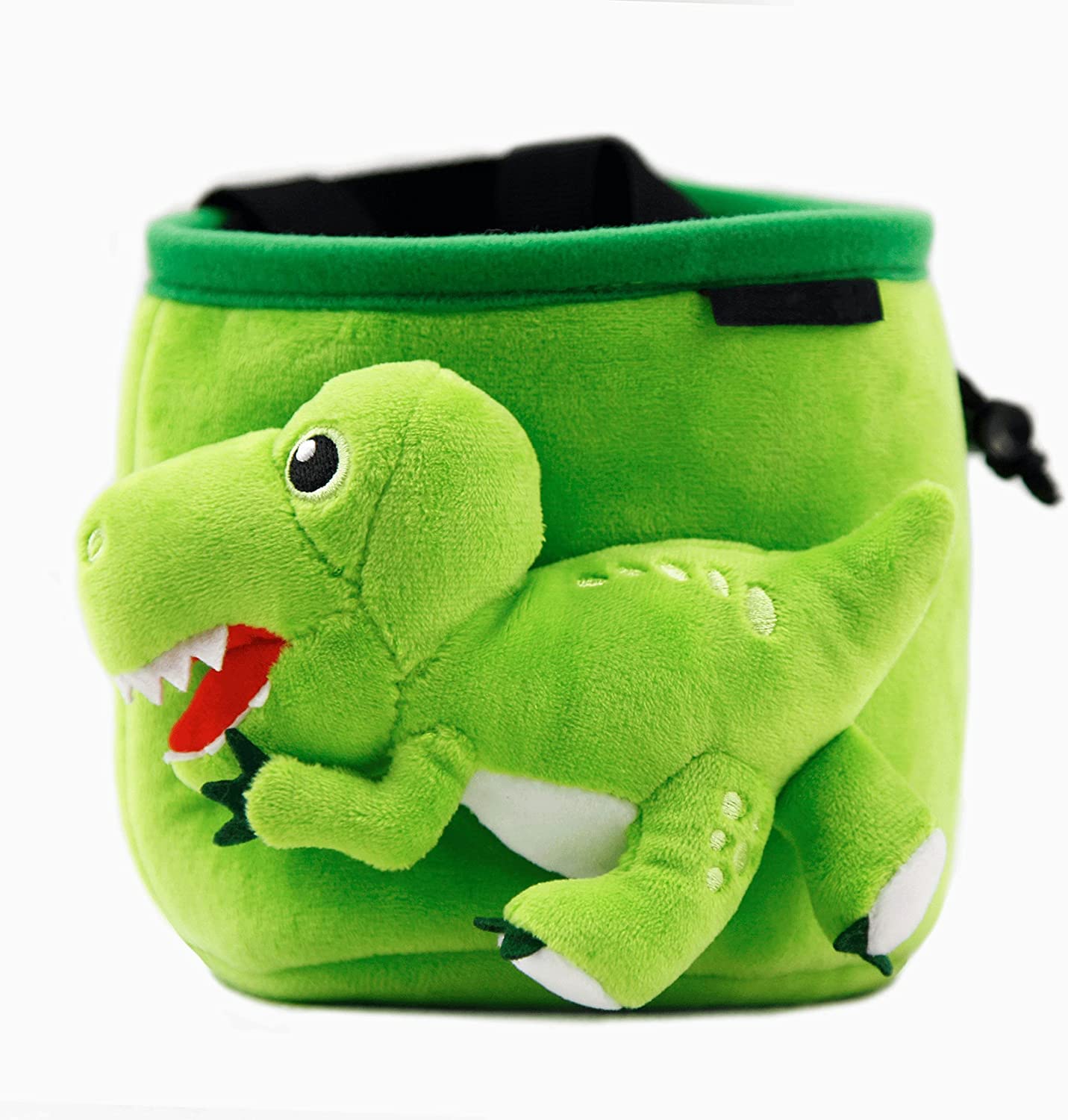
The dinosaur shape is the entire reason to choose this bag, and we are fine with that. It is a fun, light 100 g pouch with a wide opening, an adjustable belt, and a single pocket, and the drawstring and wide mouth do the basic job for kids and adults who want a little personality at the wall. At 4.21 by 8.66 by 11.97 inches, it is the silhouette you notice before you notice the chalk, and we recommend it as a gift or a second bag for someone who likes the attention.

It is not the bag we pack for a long crag day; the Noborou's large back pocket and brush loops are more practical for that. But for a kid's first bag or a gift, the 100 g body and adjustable belt make it easy to wear, and the wide opening still lets a chalky hand in fast. The belt adjusts to fit adults and children, so it can move from a kid's first harness to a parent's gym bag without a separate purchase. The T-Rex is also a conversation starter at the gym, and it is light enough that the joke does not become a burden on your harness. The fun is the point, and the bag does not get in the way of a quick chalk-up.

Pros

  • Dinosaur design makes it a fun gift
  • Wide opening and adjustable belt
  • Light 100 g body

Cons

  • Single pocket limits essentials
  • Taller body takes more pack space
Our verdict

We recommend this as a gift or a fun second bag when the point is to smile between attempts, not blend in.

Check Latest Price

How We Tested the Best Climbing Chalk Bags

We started by researching the chalk bags climbers actually buy, then narrowed the field by capacity, closure style, belt design, pocket layout, and price. We ended up with 15 bags—from minimalist pouches to feature-heavy models with multiple pockets—and tested them for three months.

Testing happened where chalk bags live: at the gym during bouldering and top-rope sessions, and outdoors on sport and trad cragging days. We filled each bag with fresh chalk and clipped it to a harness or wore it on the included belt, then practiced reaching for chalk one-handed while hanging on a route. To check closure security, we shook each bag upside down and jostled it in a pack; to test pockets, we stuffed them with tape, a phone, and keys. We also noted how much chalk each held and whether the bag stayed put during a climb.

After each session, we inspected stitching, fabric wear, and belt webbing for fraying. We adjusted belts over different layers and noted which bags slid around or dug in. At the end, we compared what each bag offered against its price to judge value. Bags that kept chalk accessible, held small items securely, and showed no wear after three months rose to the top.

How to Choose Climbing Chalk Bags

Start With How You Carry It

A fixed quick-clip belt is the simplest setup for gym climbing and roped sessions: thread it once, adjust the webbing, and the bag stays on your hip. A removable belt is the more flexible choice for bouldering, because you can take it off and hang the bag from a carabiner at the base of the wall. If you often wear a harness with gear loops, a carabiner attachment is quicker than rethreading a belt.

Check the belt length before you buy. A 40-inch belt covers many layers, but it is not universal; if you are near the top of the range, look for a bag that also offers carabiner carry. The Old Blue and Sukoa use quick-clip belts, while the Noborou's belt comes off completely.

Look for a Closure That Seals, Not Just Cinches

Drawstrings are the default for a reason: they are light, cheap, and easy to replace. The difference is in the details. A cord that runs through a smooth channel and can be pulled evenly is less likely to leave a gap, while a stiff or sticky cord makes one-handed closing a chore. A stiffened rim helps the bag stay open while you chalk up, but it does not guarantee a tight seal.

Decide how much containment you need. For gym use, a basic drawstring and fleece lining are usually enough; for a windy crag or a bag that rides in a pack, a closure that pulls completely shut matters more. Check the cord and the plastic toggle before a trip, and replace the bag if the drawstring is frayed.

Match the Opening to Your Hands

A wide mouth is not a marketing nicety; it is what lets you chalk up without scraping your knuckles. If you have large hands, wear tape, or climb in cold weather, prioritize a bag with a stiffened rim and a generous opening. The Noborou and Oso Classic are the roomier shapes in this group; the compact Sukoa and Survivor bags suit smaller hands or gym bags where space is tight.

Capacity claims are harder to compare than they look. A bag that holds a lot of chalk can still have a narrow mouth, and a wide mouth can leave less room for a deep chalk load. Put your hand in the opening if you can, or compare the listed dimensions rather than the word large.

Choose Pockets for the Phone You Carry

Pockets are where chalk bags quietly succeed or fail. A zippered pocket that fits your phone, keys, and a strip of tape makes the bag a complete gym carry; a pocket that only fits a card is just a place to lose a card. Check the pocket dimensions against your phone, especially if you use a large model or a thick case.

The number of pockets matters less than their placement. Two flat zip pockets are useful for separating keys from a phone; a single large back pocket is easier to reach with the bag on. The Old Blue and Sukoa lean toward two zip pockets, while the Noborou and Oso Classic offer a larger main pocket or more compartments.

Inspect the Parts That Wear First

Drawstrings, belt loops, and clips take more abuse than the bag body. A frayed cord, a cracked toggle, or a loose stitch at the belt loop is a warning sign, especially on a bag that gets clipped on and off every session. A metal shield or reinforced opening can protect the fabric where the cord rubs, but it is not a substitute for a clean, even pull.

Fabric choice is secondary to construction for most climbers. Nylon and polyester shells wipe clean and resist abrasion; fleece or corduroy linings feel softer and hold chalk well. If you climb indoors, choose a bag you can empty and wipe out without much fuss.

Frequently Asked Questions

Final Verdict

For most climbers, the Old Blue is the bag we recommend first: its stiffened rim, two zip pockets, and adjustable quick-clip belt make every chalk-up simpler, and it is light enough to wear all session. If you want chalk included, choose the Survivor bundle; if you move between roped climbing and bouldering, the Noborou's removable belt is the more flexible design. Pick the convenience you will use most, and the rest of the list gets easy to ignore.