Best Booster Car Seats of 2026

The morning my oldest clicked out of his five-point harness for good, I felt a flicker of pride and a much larger flicker of dread. A booster doesn't hold a kid in so much as it lifts them until the lap belt crosses the hip bones instead of the stomach and the shoulder belt lands on the collarbone, not the throat. That geometry is the whole job, and it's surprisingly easy to get wrong.

I spent eight months living with 12 booster seats, from bare backless cushions to high-backs that convert. The lesson that surprised me most: the LATCH connectors on a booster don't restrain your child, the vehicle belt does. LATCH only keeps an empty seat from sliding around, so a seat without it isn't automatically less safe.

What separated the good ones was fit, not price — whether the belt landed right on a 45-pound kid in a compact sedan and a full-size SUV alike, whether the padding held up through a four-hour drive without complaints, and whether I could install it in a school lot in two minutes flat. The seats that cleared all of that are below.

The Best Booster Car Seats

1

Chicco KidFit ClearTex Plus Best Overall
99 /100
Traveler Score Outstanding

Key details

Height Range
44–57 in
Weight Range
40–110 lb
Attachment
Quick-release LATCH
Modes
High back + backless
Check Details on Amazon

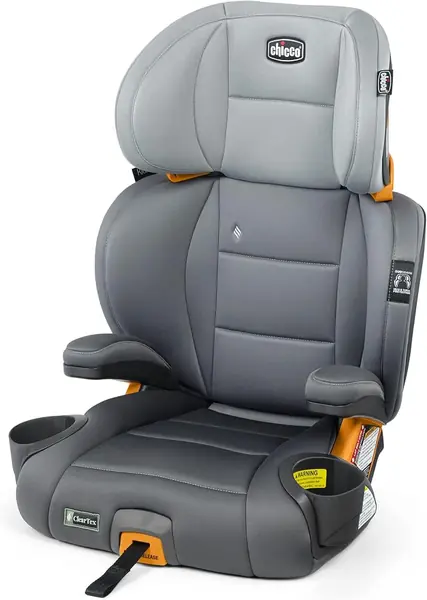
The headrest is the part we keep coming back to. It moves through 10 positions and adjusts from the waist rather than from behind the neck, so the shoulder belt guide rises with your child instead of staying where it sat the day you bought the seat. That one detail decides whether a belt-positioning seat still fits properly in year three or starts routing the belt across a shoulder blade.

The other half of the case is the attachment. Premium LATCH connectors and a SuperCinch one-pull tightener draw the seat down against the cushion, and a quick-release latch lets you lift the whole thing out one-handed. What that buys you is a seat that doesn't skate sideways when a 6-year-old climbs in, which is the difference between a child who buckles themselves and one who calls for help on every trip.

It converts from a high back to a backless once your child is ready, and the fabric deserves a sentence of its own: ClearTex materials carry no added flame retardants and still meet federal flammability standards, which is not something every seat in this group can claim. Both CupFolders are dishwasher-safe and fold flat when empty, and the cover comes off for the washing machine.

What it asks in return: a firm, steady pull on the SuperCinch before the seat sits still, and a longer first install than the Graco convertibles take. The 44-inch height minimum also rules out a small 4-year-old. Neither is a dealbreaker next to what you get — a belt path that stays put, a headrest that keeps pace with a growing child, and a seat that turns into a backless rather than being replaced.

Pros

  • 10-position headrest adjusts from the waist
  • Quick-release LATCH with one-pull tightener
  • Converts from high back to backless
  • ClearTex fabric with no added flame retardants

Cons

  • Premium price for a belt-positioning booster
Our verdict

We recommend the KidFit ClearTex Plus as the default booster for most families: it holds tight with LATCH, grows through 10 headrest positions, and converts to a backless.
Check Latest Price
2

Graco TurboBooster 2.0 LX Backless Best Backless Booster

98 /100
Traveler Score Outstanding

Key details

Height Range
43–57 in
Seat Weight
6 lb
Weight Range
40–100 lb
Attachment
Front-adjust LATCH
Check Details on Amazon

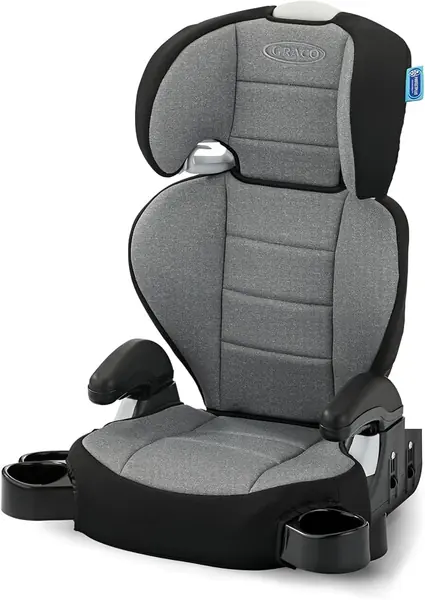
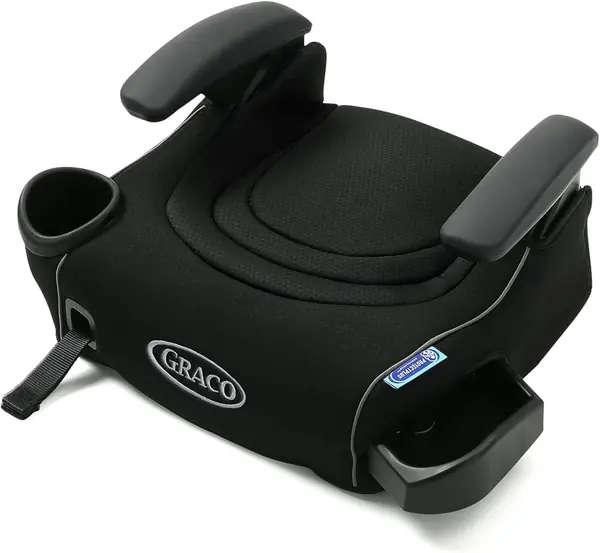
Most backless boosters are a cushion you set on the seat and then chase back into place every time a kid climbs in. The TurboBooster 2.0 LX Backless is the one here that clips down: a front-adjust LATCH system hooks into the vehicle's lower anchors, so the seat stays where you put it whether or not anyone is sitting in it.

We like it for the car that carries a child every day. Because the base doesn't move, an 8-year-old can drop in and pull the belt across without first fishing the booster out from under themselves, and the shoulder-belt guide keeps the strap off the neck. The 40-to-100-pound, 43-to-57-inch range matches most of this group, so what separates it is the anchors rather than extra room.

What you give up is the back. In a vehicle seat with a low cushion and no headrest at your child's head height, a backless booster lifts your child but leaves nothing behind their head — in that car, buy a high back instead. Where the headrests adjust properly, we don't miss the back at all, and the hideaway cup holder and side cubby give a backless seat somewhere to put a water bottle.

Pros

  • Front-adjust LATCH keeps the seat from sliding
  • Stays put so a kid can buckle alone
  • Hideaway cup holder and side cubby
  • Six pounds, easy to hand between cars

Cons

  • Short LATCH clips are fiddly to hook up
Our verdict

If your child rides in the same car every day, this is the backless booster we point you to: the LATCH anchors keep it from sliding, so buckling stays a one-person job.

Check Latest Price
3

Safety 1st Grand 2-in-1 Best for Kids Still in a Harness

97 /100
Traveler Score Outstanding

Key details

Seat Weight
8.8 lb
Booster Range
40–100 lb
Harness Range
40–65 lb
Width
17.75 in
Check Details on Amazon

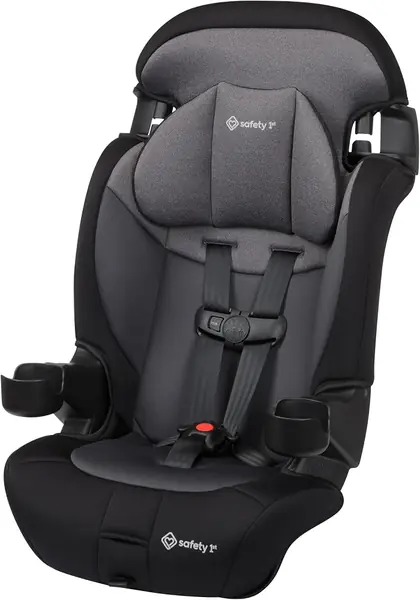
For the 4-year-old who is 40 pounds and not ready to sit still under a shoulder belt, this seat buys another year or two. The Grand runs a five-point harness from 40 to 65 pounds and 43.4 to 49 inches, then converts to a belt-positioning high back that carries a child to 100 pounds.

It's built for crowded back seats. At 17.75 inches across it goes three across in a row that already holds a harnessed seat, and at 8.8 pounds it comes out and goes back in without a wrestling match. The seat pad is machine-washable and dryer-safe, and the two cup holders come out for rinsing — worth having once a kid is drinking in the car.

We think it's the best value in a combination seat here. A harness, a high back, and lower anchors for the harness years, for a lot less than the premium 2-in-1s ask. Once your child is past 45 pounds and sits correctly without reminders, the high-back convertibles here do the same job with less seat to move around — that's the point where this one stops being the right answer.

Pros

  • Harness to 65 lb, then belt-positioning to 100
  • Slim enough for three across
  • 8.8 lb, easy to move between cars
  • Machine-washable, dryer-safe seat pad

Cons

  • Lower anchors work in harness mode only
  • Harness adjuster needs a firm pull to snug
Our verdict

Buy the Grand 2-in-1 if your child still fits a five-point harness — it bridges harness to high back for far less than the premium seats, and it's slim enough for three across.

Check Latest Price
4

Graco TurboBooster 2.0 Highback Best Value High-Back

96 /100
Traveler Score Outstanding

Key details

Height Range
43–57 in
Seat Weight
7.7 lb
Weight Range
40–100 lb
Modes
High back + backless
Check Details on Amazon

This is the least expensive route to a high back in this group, and it doesn't read as a budget seat. The TurboBooster 2.0 covers 40 to 100 pounds and 43 to 57 inches, the headrest moves up as your child grows, and the back unclips so the same seat becomes a backless when the third row gets crowded or your child stops needing head support.

Daily handling is where it earns its place. At about 7.7 pounds it lifts out with one hand, the two cup holders fold into the shell when they're empty, and the cover wipes down without a fight. Assembly is a matter of clicking the back onto the base, and the open-loop belt guides make it easy to show a kid where the shoulder strap belongs.

We like it most as the second seat — the one in the other car, the one at Grandma's, the one that doesn't get reinstalled every week. Set it in place, run the belt through the guide, and it does the same belt-positioning work as seats that cost a good deal more. If the booster moves often, or your child still needs help getting buckled, pay for LATCH instead; that's the KidFit ClearTex Plus above, and it's the upgrade worth making.

Pros

  • High back converts to a backless
  • About 7.7 lb, easy to lift out
  • Hideaway cup holders fold into the shell
  • Adjustable headrest as your child grows

Cons

  • No lower anchors, so it slides when empty
Our verdict

The TurboBooster 2.0 Highback is our value pick: a real high back that becomes a backless, light enough to hand between cars, for the least money in this group.

Check Latest Price
5

Cosco Topside Backless Best for Tight Back Seats

95 /100
Traveler Score Outstanding

Key details

Height Range
43.4–57 in
Seat Weight
2 lb
Weight Range
40–100 lb
Width
15.5 in
Check Details on Amazon

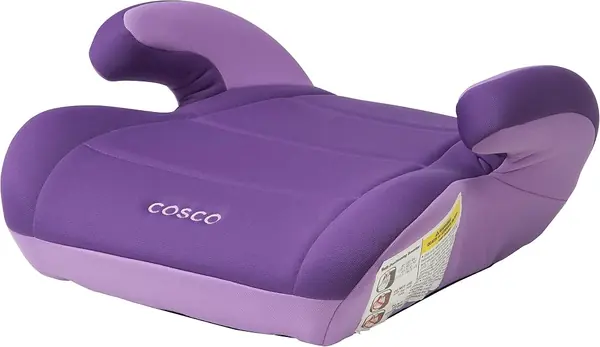
There's no back, no cup holder, and very little padding, and that's the point. The Topside is 15.5 inches wide and 2 pounds, which is what makes it the seat that fits three across in a row that already holds two harnessed car seats, and the one you can hand a kid to carry into a restaurant.

We recommend it for the third row, the truck's back bench, and the grandparent car that sees a child twice a week. Set it in place, thread the lap belt under the armrests and low across the thighs, and check that the shoulder belt crosses the middle of the shoulder — the armrests sit low, and on a smaller child the lap belt can ride over them instead of across the hips. Do that check on day one and the Topside does the belt-positioning job in half the footprint of the wider seats.

Pros

  • Narrowest shell here at 15.5 inches
  • Two pounds, easy to carry anywhere
  • Covers 40–100 lb and 43.4–57 in

Cons

  • Thin padding for long drives
  • Cover is hand-wash only
Our verdict

Buy the Topside if space is the problem: it's the narrowest, lightest booster here, and it fits three across where a high back won't.

Check Latest Price
6

Chicco MyFit 2-in-1 Best Premium Combination Seat

94 /100
Traveler Score Outstanding

Key details

Height Range
38–54 in
Seat Weight
25 lb
Booster Range
40–100 lb
Harness Range
25–65 lb
Check Details on Amazon

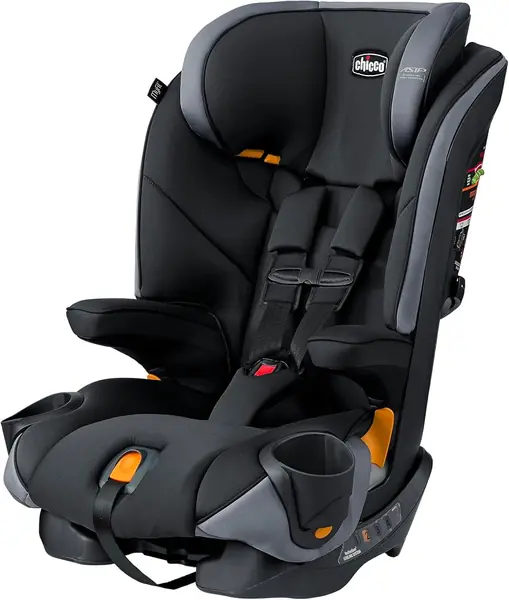
At 25 pounds, the MyFit is the heaviest seat here, and most of that weight is doing something. The shell carries a five-point harness from 25 to 65 pounds and converts to a belt-positioning high back to 100, with nine headrest positions, four recline positions, and dual-density foam running the length of the seat.

The recline is the feature we noticed first. Tilting the seat back keeps a sleeping child's head from dropping forward, which is the difference between a quiet highway hour and a loud one. The premium LATCH connectors and the LockSure belt-tightening system pull it down hard against the cushion, and the RideRight bubble levels take the guesswork out of the angle on a sloped seat.

Padding is where the money shows. The ErgoBoost seat is deep and contoured, the cover and armrest pads come off for washing, and the two CupFolders pull out for the dishwasher and fold flat when nobody is using them. At 17.5 inches wide it plays nicely beside other seats, though it isn't the slim choice in this group.

The MyFit makes sense for one family: the one with a 3- or 4-year-old still in a harness, who wants the seat to last through the booster years and who leaves it installed in a single vehicle. Move it weekly and the weight turns into a chore. Leave it where it is and it's the most supportive seat in this group on a long drive.

Pros

  • Harness to 65 lb, then booster to 100
  • Nine headrest positions and four-position recline
  • LATCH and LockSure hold it firmly
  • Dual-density foam and washable cover

Cons

  • Premium price
  • Sits high, so small kids need a leg up
Our verdict

We recommend the MyFit for a harnessed preschooler who will stay in this seat through the booster years — it's the most supportive seat in this group, and the weight only matters if you move it.

Check Latest Price
7

Diono Solana 2-Pack Best for Two Vehicles

93 /100
Traveler Score Outstanding

Key details

Height Range
38.2–63 in
Seat Weight
6.1 lb
Weight Range
40–120 lb
Attachment
Seat belt only
Check Details on Amazon

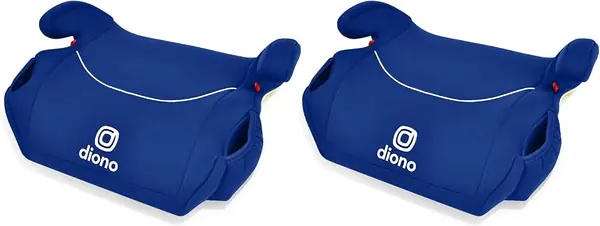
Two backless boosters in one box is the whole idea, and it solves a specific problem: the child who is always in the other car, and the booster that is always in this one. If you're outfitting two vehicles, buying the pair at once costs less than two singles and means nobody has to remember to move a seat.

The size range is the longest here — 40 to 120 pounds and 38.2 to 63 inches — so it keeps working after a child passes the 57-inch ceiling most of the others set. The contoured foam padding is better than the price suggests, the covers come off for the machine, and the elastic cup holders add no width when they're empty.

They stack, they store flat, and at 6.1 pounds each they're easy to hand between cars. What they won't do is go three across: the shell is 16.9 inches wide and doesn't nest with other seats, so measure before you count on a third child in that row.

We keep the Solana in the guide as the second-car answer rather than a main pick. For a vehicle that carries a child a few times a week it's hard to beat two seats for about what one padded seat costs, and the height range means they last. Just don't buy the pair expecting a high back or a third seat in the row — this is the seat a child graduates into, not the one they start in.

Pros

  • Two seats in one purchase
  • Tallest range here, to 63 inches
  • Machine-washable covers and elastic cup holders
  • 6.1 lb each and stackable

Cons

  • No lower anchors, so they slide when empty
Our verdict

Buy the Solana pair for the second and third cars rather than the main one: two backless seats, the tallest height range here, and no head support of their own.

Check Latest Price
8

KidsEmbrace 2-in-1 Best for Character Fans

92 /100
Traveler Score Outstanding

Key details

Height Range
29–57 in
Attachment
LATCH + tether
Booster Range
40–100 lb
Harness Range
26.5–65 lb
Check Details on Amazon

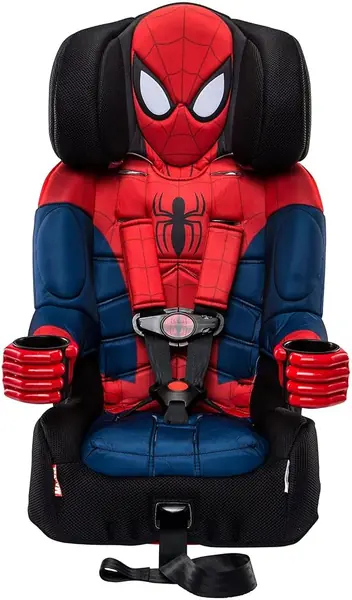
The Spider-Man shell is the reason a 5-year-old asks for this seat by name, and we won't pretend the graphics had nothing to do with it. Underneath is a forward-facing combination seat: a five-point harness from 26.5 to 65 pounds and 29 to 49 inches, then a belt-positioning high back to 100 pounds and 57 inches, held in with lower anchors and a top tether.

The padding is generous and the seat is roomy, the kind of build that keeps a kid comfortable two hours into a drive. It arrives assembled, the cup holders are deep enough for a real water bottle, and the cover wipes clean between washes.

Where it gives ground is the buckle. The harness and the belt path sit deep in a wide shell, and on a smaller child the buckle can end up pressed against a thigh, which makes the seat feel harder to use than it is. Sit your child in it before you commit. For a kid near the top of the harness range who climbs in and buckles without help, the character is worth real money — it's the difference between a fight every morning and no conversation at all.

Pros

  • Harness to 65 lb, then high back to 100
  • Generous padding and deep cup holders
  • Arrives assembled
  • Lower anchors plus top tether

Cons

  • 15 lb shell is bulky to move between cars
Our verdict

Buy it if the character is what gets your kid into the seat without a fight — the harness and booster ranges are solid and the padding is real.

Check Latest Price

How We Tested Booster Car Seats

We started with every booster we could find for kids roughly 40 to 100 pounds, then cut the list using spec sheets and owner reviews: high-back versus backless, seats that convert, LATCH-equipped versus belt-only, washable covers, cup holders. That left 12 seats, which my team tested for eight months.

Each seat went into at least three vehicles — a compact sedan, a mid-size SUV, and a third row — because one that fits a bench beautifully can sit crooked in another. I installed every one solo in a school lot with cars waiting, timing myself, then buckled kids of different heights and weights in and checked where the lap belt landed and where the shoulder belt crossed.

For LATCH models, I clipped them in and yanked sideways at the belt path to see how much they shifted; for the belt-only seats, I ran the same test with nothing holding them down and watched whether an empty seat slid or tipped through a turn.

The rest was ordinary life: the pickup line, a four-hour drive, three seats across one bench, a rainy transfer to a grandparent's car. I noted padding that flattened, covers that survived the wash, cup holders that held a real cup, and kids who started squirming around mile 40.

How to Choose a Booster Car Seat

High back or backless

A high back does two things a backless can't. It routes the shoulder belt through a guide at a height that suits your child, and it puts a shell and head support behind their head. Look at your back seat before you shop: if the cushion is low and there's no headrest at your child's head height, a backless booster lifts them up but leaves nothing behind their head, and that settles the question.

Backless seats earn their place for older children, crowded rows, and travel. Choose a high back for a 4- or 5-year-old and let them graduate later — the KidFit ClearTex Plus converts when the time comes, and the Cosco Topside is what you buy for a third row where a back simply doesn't fit.

Does a booster need LATCH?

The vehicle belt holds your child; the lower anchors only hold the seat. That sounds like a small distinction until you watch a backless booster seat slide out from under a child who is trying to buckle, or listen to it rattle around an empty car. A LATCH-equipped seat stays where you put it, and that is what makes solo buckling realistic.

The catch is that anchor use varies by mode. Some combination seats allow it in harness mode only and want the connectors stowed once the harness comes out — the Safety 1st Grand is one — so read the manual for the mode your child is in. If a seat never leaves one vehicle, belt-only is perfectly workable.

Width and fitting three across

Shells here run from 15.5 inches to nearly 20, and that spread decides whether a third child fits. Measure your back seat between the seat belts, subtract the width of the two outer seats, and you have your answer before you order anything.

Narrow isn't the same as compatible. The Diono Solana is 16.9 inches wide and still won't go three across in most vehicles, because of the way the shell is shaped. The Cosco Topside and the Safety 1st Grand are the two here most likely to make a tight row work.

Harness or seat belt

A belt-positioning booster assumes your child can sit still with the belt in the right place for the whole ride. A 4-year-old who slumps, unbuckles, or tucks the shoulder belt behind their back isn't ready, and a combination seat with a five-point harness buys time. The Safety 1st Grand harnesses to 65 pounds; the Chicco MyFit goes to 65 with deeper padding and a much larger footprint.

Once your child sits correctly without reminders, the harness has done its job and booster mode takes over. Use the seat's own label as the authority on when that happens, not the age on the box and not what an older sibling did at the same age.

Frequently Asked Questions

Final Verdict

The Chicco KidFit ClearTex Plus is the booster we recommend to most families: LATCH pulls it down tight, the headrest grows through 10 positions so the shoulder belt stays where it belongs, and the back comes off when your child is ready for a backless.

If your child still fits a five-point harness, start with the Safety 1st Grand 2-in-1 and save the difference. And if the seat has to live in a cramped third row, the Cosco Topside does the same belt-positioning job in 15.5 inches.