Best Arch-Support Insoles for Travel of 2026

A trip is the worst possible time to find out your arches can't keep up. You've got a museum morning, a train platform, a hotel bed that isn't yours, and by midafternoon your feet are sending messages you can't ignore. A good pair of arch-support insoles turns the packable, good-looking shoes you actually want to bring into something you can stand in until dinner. That's the whole job: take a shoe that's fine for an hour and make it fine for eight.

I've spent four months putting 14 pairs through airports, cobblestones, and a trade-show floor where I was on my feet from 9 to 6, moving most of them between two or three pairs of shoes. The first ten minutes told me almost nothing — the pairs that won were the ones I stopped noticing by hour four. Insoles are also one of the cheapest travel upgrades going, but fit is what you're really paying attention to, since a pair that's a half inch too long will curl under your toes and undo everything the arch was doing. These are the ones I'd pack again.

1

Best Overall

Dr. Scholl's Custom Fit Orthotics

92 /100
Traveler Score Outstanding

Key details

Length
3/4 length
Trimming
None needed
Cushioning
Three-layer system
Arch Support
Adaptive 3D arch
Check Details on Amazon

A week away usually means one pair of walking shoes and one pair you can stand to be seen in at dinner. A 3/4-length insert handles both. The Dr. Scholl's CF420 runs from the heel to just behind the ball of your foot, so it drops into a sneaker, a loafer, or a boot without being cut down for any of them.

That portability is why it's our top pick. There's no trimming and no toolkit, and it's the one here that works in shoes whose original footbed is glued in place — the dress shoes and casual sneakers you'd otherwise write off. The build is three layers: a shock-absorbing base, an adaptive 3D arch, and a soft top cloth, so it reads as an orthotic underfoot rather than a padded flat.

It does shift. Stopping short of the toes means giving up the anchor a full-length insole gets from the front of the shoe, so it can creep forward when you pull a shoe off or walk in something loose. Set it hard against the heel every time you put the shoe on and it stays put through a walking day.

If your trip is one pair of running shoes and nothing else, a full-length insole buys you more coverage for less money, and the WalkHero pair below is the obvious example. The 3/4 shape earns its place when the bag holds two pairs of shoes and only one of them will take an insole.

Pros

  • Fits without trimming or cutting
  • Works over glued-in footbeds
  • Three layers of cushion under the arch

Cons

  • Stops behind the ball of the foot, so no forefoot support
Our verdict

The insole we point most travelers to: it slips into sneakers, loafers, or boots without trimming, adds support without crowding your toes, and moves with you between shoes.
Check Latest Price
2

Best for Long Walking Days

Superfeet All-Purpose Support

89 /100
Traveler Score Excellent

Key details

Size Band
7.5–9 M / 8.5–10 W
Arch Height
High
Underfoot Feel
Firm
Check Details on Amazon

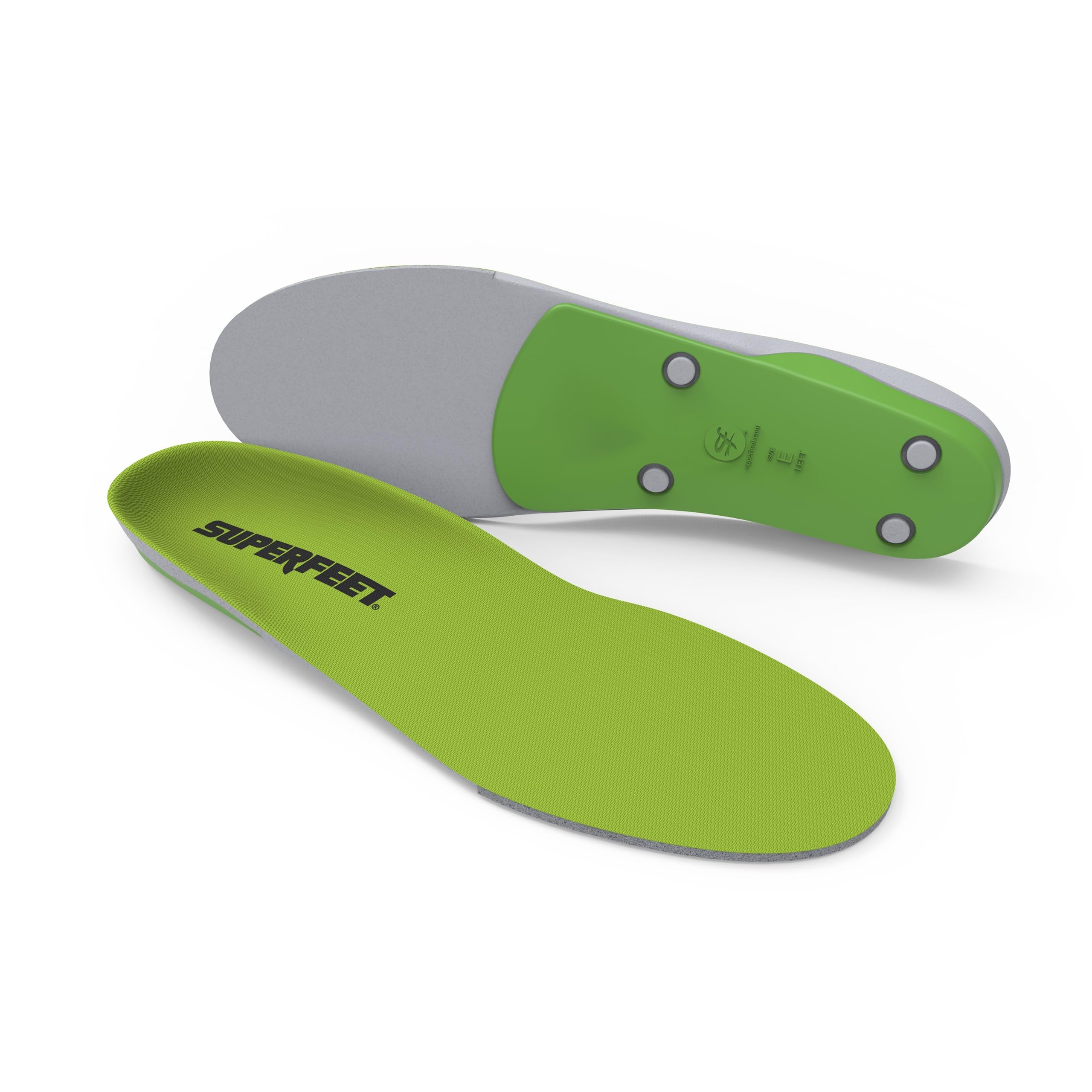
There's almost no give in the Superfeet Green, and that's the reason to buy it rather than a reason to skip it: a stiff shell holds a high arch up instead of letting it sink into foam. Pick it up and it behaves like a piece of structure, not a pad.

That structure is what carries the day. The shell doesn't pack down the way a foam insole does, so the support you feel in the morning is still there after a museum afternoon. It's the pair we leave in walking shoes and hiking boots rather than the sneakers we wear around the house. The arch is genuinely high — this is not a mild bump — and the heel cup centers the foot instead of letting it wander.

Fit is the risk. On a smaller foot the high point can land ahead of your own arch, and a hard insole in the wrong place hurts more than it helps. This pair comes in a band of men's 7.5–9 and women's 8.5–10, so match that to your shoe and stand in them at home before you pack them.

Pros

  • High, firm arch that holds its shape
  • Noticeable relief for plantar fasciitis pain
  • Holds up longer than foam-topped insoles

Cons

  • Takes up room in a close-fitting shoe
Our verdict

For a genuinely high arch and a long day on your feet, this is the most convincing support in the group — and if your feet want cushioning, it will feel like a ridge under your instep.

Check Latest Price
3

Best for High Arches

PowerStep Pinnacle High Arch

89 /100
Traveler Score Excellent

Key details

Use
Plantar fasciitis and supination
Arch Height
High
Underfoot Feel
Firm but not rigid
Check Details on Amazon

Two insoles here are built for high arches, and the difference between them is how much give you want. The Superfeet Green is the harder of the pair. The PowerStep Pinnacle High Arch keeps the arch just as high but puts something softer between you and the floor.

It's a full-length orthotic shaped around a high arch, with a heel cup that holds the foot steady instead of letting it slide forward, and a form built to support supination as well as plantar fasciitis pain. It's made in the USA, which matters to some buyers more than others, and it sits in the shoe rather than on top of it.

For a high-arched foot that has found rigid orthotics unbearable, this is the one we hand over first. The caveat is that the shell is built for a real high arch: a medium or low arch doesn't need this much structure, and the money is wasted on it.

Pros

  • High arch with more give than a rigid shell
  • Heel cup keeps it steady in the shoe
  • Built for plantar fasciitis and supination

Cons

  • Price sits at the top of this group
Our verdict

If you have high arches but hard orthotics have been unwearable, this is the pair to try: the arch stays high while the ride under it softens.

Check Latest Price
4

Best Value

WalkHero Arch Support Inserts

88 /100
Traveler Score Excellent

Key details

Heel Cup
Deep
Material
EVA
Shoe Fit
Wider, high-volume shoes
Check Details on Amazon

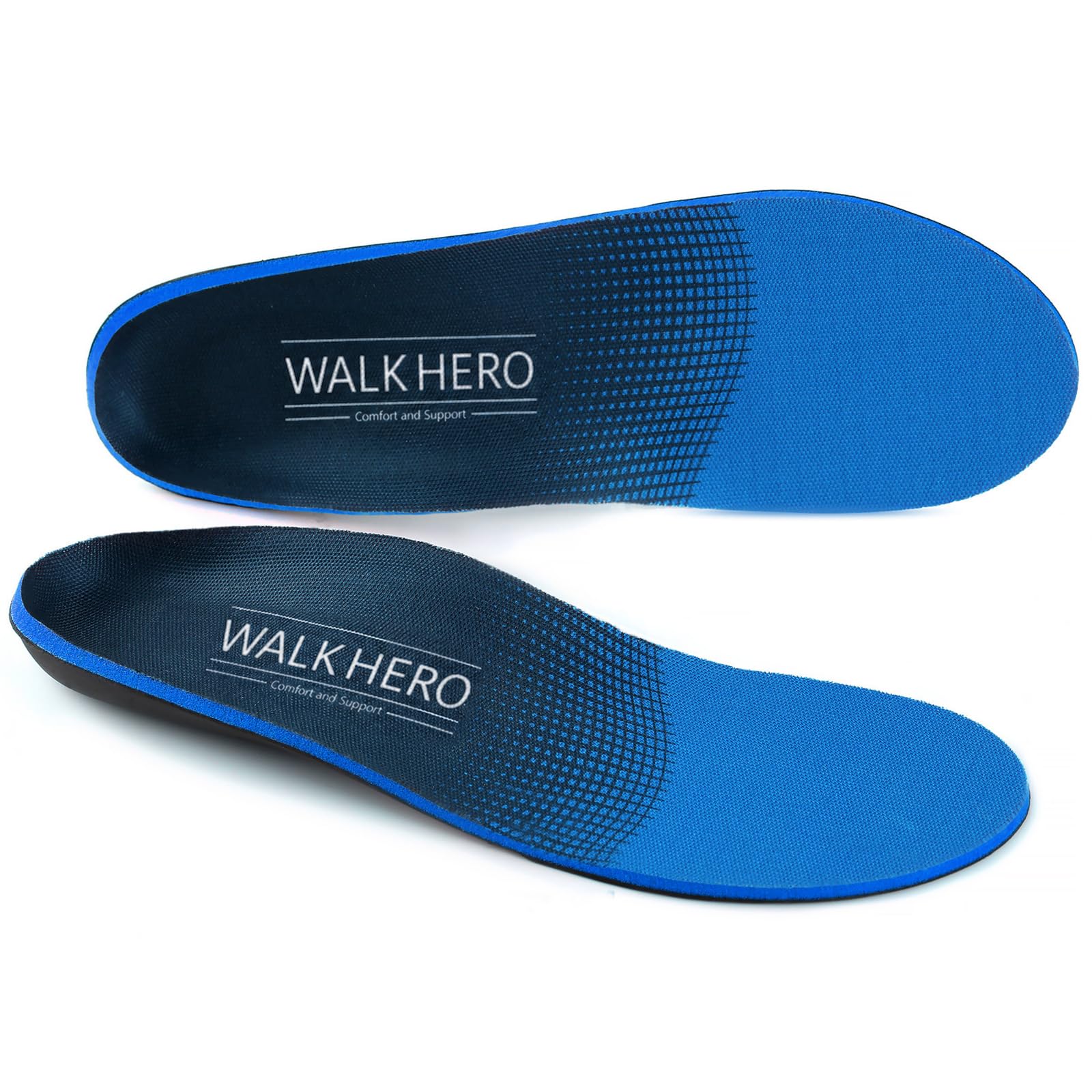
You don't need to spend much to get a real arch under your foot, and the WalkHero inserts are the pair that makes the case. What arrives is an EVA shell with a deep heel cup and a fabric top — not a flat pad with a bump pressed into it.

The support is the reason to buy: the heel cup is deep enough to keep the foot centered, the arch is a shelf rather than a suggestion, and the fabric top stops the foot skating on a warm day. The shape is made for wider, higher-volume shoes — work boots, basketball shoes, running shoes — which is exactly where a travel pair usually lives.

Trim it against the insole you're pulling out rather than the printed size, cutting a little at the toe and checking the fit before you commit; once it's cut, it's yours. In a slim sneaker it will crowd your toes, so save it for the roomier shoe in the bag.

Pros

  • Genuine arch support at a budget price
  • Deep heel cup keeps the foot centered
  • Fabric top resists sliding

Cons

  • Firm and hard underfoot, with little cushioning
Our verdict

You don't have to spend much to get a real arch under your foot, and this pair makes that case better than anything else here.

Check Latest Price
5

Best for Overpronation

Spenco Total Support Max

89 /100
Traveler Score Excellent

Key details

Forefoot
Metatarsal pad
Heel Cup
Deep
Size Band
Women's 11–12.5 / Men's 10–11.5
Arch Support
Firm, contoured
Check Details on Amazon

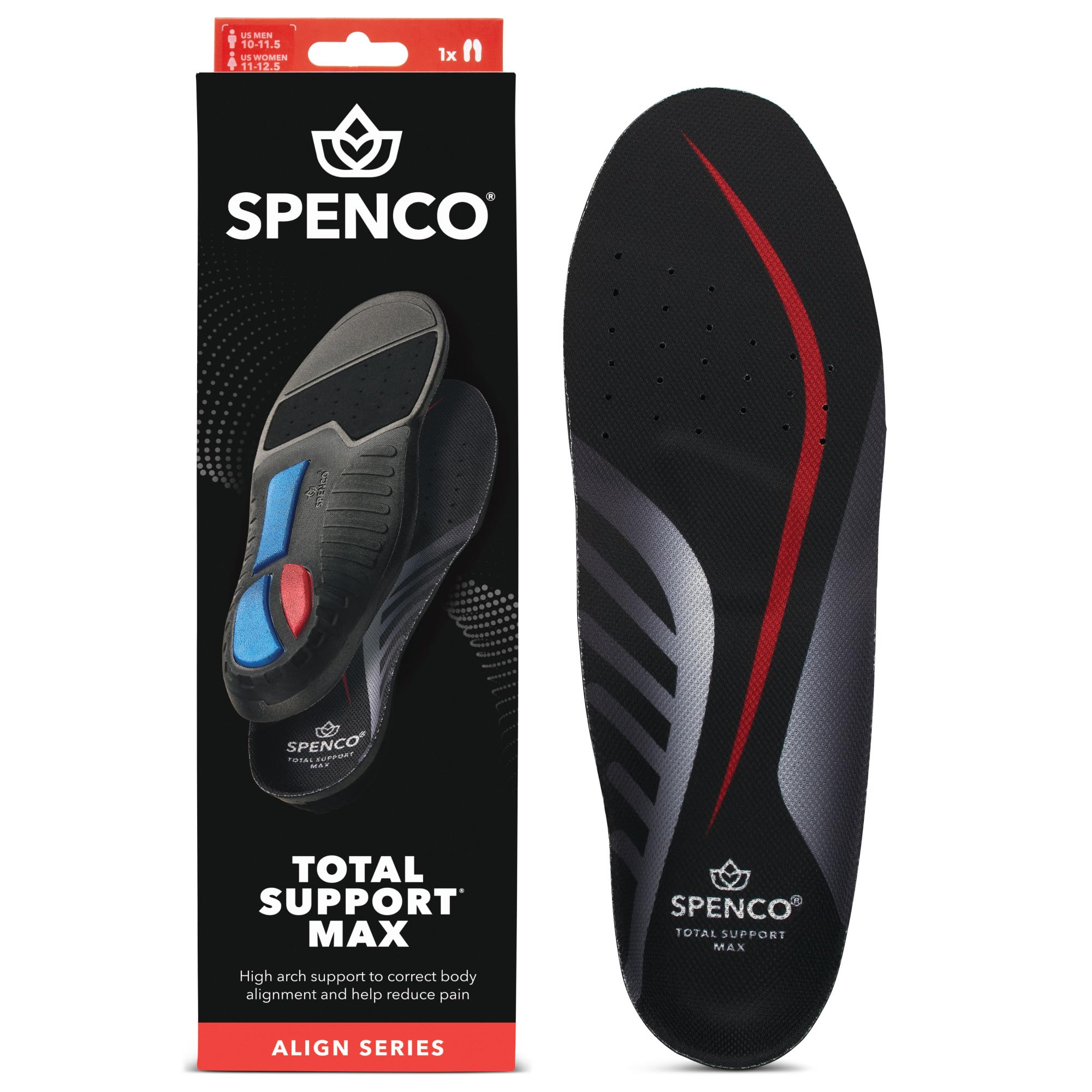
Three densities in one shell is the idea behind the Spenco Total Support Max: a rigid pod under the arch to slow overpronation, softer cushioning around it, a metatarsal pad under the ball of the foot, and a deep heel cup to keep the foot centered.

For a foot that rolls inward, that structure is the whole point. A soft insole lets the ankle keep rolling; a shell with a firm medial post gives the foot something to resist, and the metatarsal pad takes pressure off the ball of the foot during a long standing day. It's full-length, so pull the shoe's own footbed out before it goes in.

It's the pick here for overpronation, and the sizing is the first thing to check: this pair covers women's 11–12.5 and men's 10–11.5, so match the band to your shoe before you order. In the right size it feels planted rather than spongy, and it's the closest thing here to a motion-control orthotic without a prescription.

Pros

  • Rigid arch pod resists overpronation
  • Metatarsal pad eases ball-of-foot pressure
  • Deep heel cup adds stability

Cons

  • Firm, rocky feel underfoot at first
  • Bulky enough to need a roomy shoe
Our verdict

The pick for feet that roll inward: a rigid pod under the arch gives the foot something to push against instead of letting it collapse step after step.

Check Latest Price
6

Dress Shoes

Airplus Plantar Fascia 3/4

88 /100
Traveler Score Excellent

Key details

Heel
Gel heel drop
Length
3/4 length
Arch Plate
Full-foot
Check Details on Amazon

A 3/4 insert is a compromise, and the Airplus makes it an inexpensive one: it ends before your toes, so a dress shoe or a heel that won't take a full-length insole still gets an arch and a gel heel. What it can't do is support the ball of your foot, and it will slide forward if you pull the shoe off without thinking.

For the shoes you keep by the door — loafers, flats, the boots you wear to dinner — that trade is worth making. The arch plate runs the length of the insert to support the plantar fascia, the gel drop in the heel softens hard floors, and it carries the American Podiatric Medical Association's seal, which not every insole here does.

Keep expectations calibrated. It's the least expensive way here to put an arch under a pair of shoes you'd otherwise leave behind, and it's happiest in a shoe with a back to hold it. On a 20,000-step day in a thin-soled shoe, this isn't the insert that saves you.

Pros

  • Slim 3/4 shape fits dress shoes
  • Gel heel softens hard floors
  • APMA certified for foot health

Cons

  • Ends before the toes, so no forefoot support
Our verdict

The cheap, slim insert that lives in the dress shoes you'd otherwise leave at home — as long as you accept it never supports the front of your foot.

Check Latest Price
7

Runners

CURREX RunPro Insoles

92 /100
Traveler Score Outstanding

Key details

Foam
PORON
Top Layer
Mesh
Arch Options
Low, medium, high
Intended Use
Running shoes
Check Details on Amazon

If the trip is built around a race, the insole question changes. You're not chasing all-day support so much as something that works with the shoe and the stride you'll repeat for 13 miles or 26, and that's a different product from a stiff orthotic.

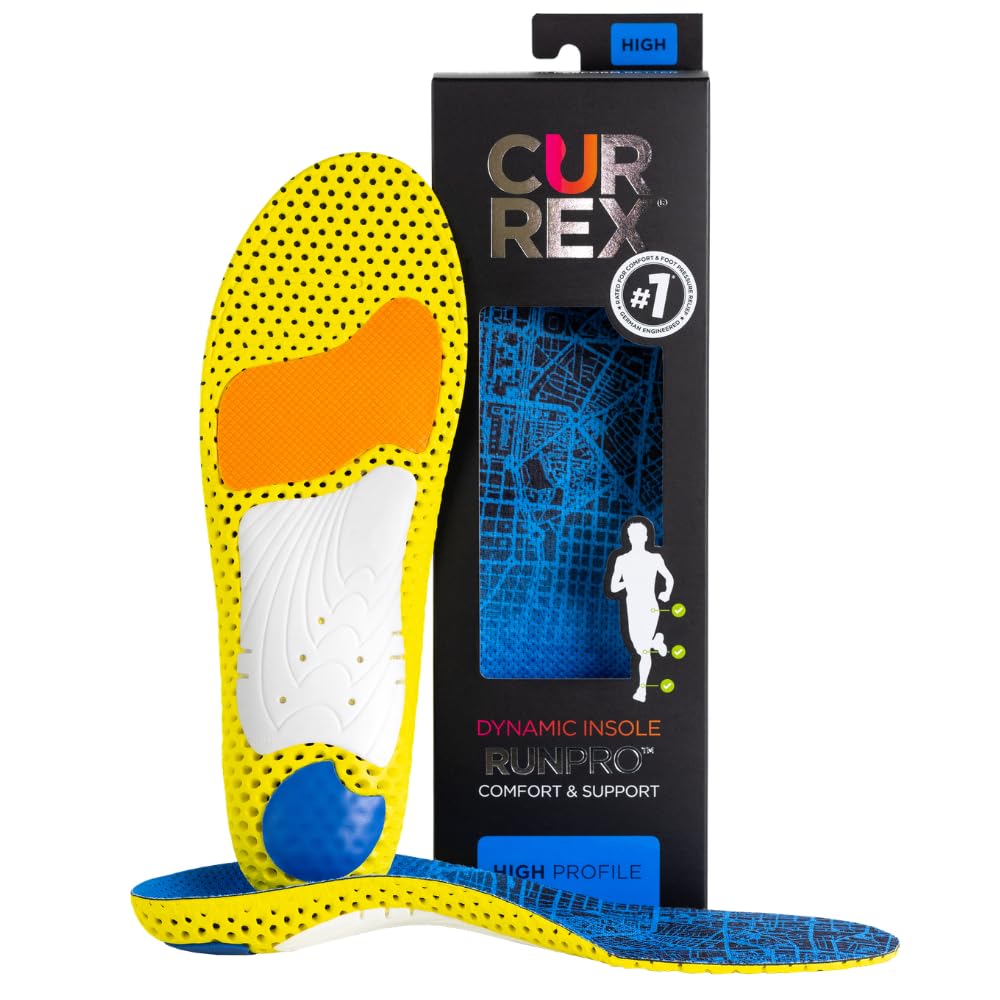
The RunPro is built for it: PORON foam under a mesh top layer, a deep decoupled heel cup, and CURREX's 3D dynamic arch, which comes in low, medium, and high profiles so you can match it to your own foot rather than guessing. This one is the high-arch, medium size.

The give is what struck us first. It cushions under the arch instead of holding a rigid shelf, which is why it works in a running shoe that already has a rocker and why it doesn't fight the shoe the way a hard orthotic can. The mesh top also keeps it from turning into a swamp on a warm day.

For a race trip or a running-heavy week, it earns its place in the bag. For a week of walking between museums, a firmer and less expensive shell does the same job, and you won't spend the trip worrying about the foam.

Pros

  • Cushioned under the arch, not rock hard
  • Arch profile options in three heights
  • Mesh top layer keeps feet drier

Cons

  • Soft foam wears before the shell does
  • Priced at the top of this group
Our verdict

For a trip built around a race, this is the pair worth carrying: support that gives under the arch instead of holding a rigid shelf against it.

Check Latest Price

How We Tested Travel Insoles

We started with a shortlist of roughly 30 insoles sold as arch support, then cut anything offered in only one arch height, anything too thick to sit inside a packable walking shoe, and anything that didn't say it was trimmable. That left 14 pairs, which I wore over four months. Every pair went into the same two shoes first — a flat sneaker and a low-profile walking shoe — so I was feeling the difference between the insoles, not the difference between my shoes.

Testing happened on real trips and the days around them: a flight with a long connection, four days walking a city from breakfast to dinner, a two-day trade show spent standing, and a weekend of errands at home. At the end of each day I wrote down where my feet hurt and how much, and whether the arch still felt held at hour eight or had bottomed out into the shoe. I also checked whether the insole had slid forward, bunched at the heel, or crowded my toes — the three failures that showed up most.

Back at the desk, I trimmed each pair against the shoe's original insole, noting whether pulling the factory insole out made the shoe too tight, and pressed a thumbnail into the arch to see how fast the foam sprang back. Each pair then stayed in one shoe for six weeks of daily wear, which is where I could see the arch compress, the edges crumble, or the top fabric pill — the things that ended the useful life of the pairs we ruled out, and the reason we weighed cost against how many months of wear each one looked likely to deliver.

How to Choose Arch-Support Insoles for Travel

Match the insole to your arch, not the label

A high-arch insole puts its peak well back under the instep. Worn by someone with a medium or low arch, that peak lands ahead of the arch and feels like standing on a rope all day. Test it standing rather than sitting: drop the insole into the shoe, put it on, press your weight down, and notice where the highest point sits.

If the peak is under your arch and your heel settles into the cup, the shape is right. If you feel pressure in front of the arch or under the ball of the foot, no amount of breaking in will fix it. On a trip, we put that match ahead of every feature on the box.

Volume is what sinks most travel insoles

An insole takes up room a shoe doesn't have to give. In a snug sneaker, a full-length orthotic can push your toes at the front and press across the instep, which is why a supportive insole sometimes feels worse than the shoe did on its own. Take the factory footbed out first.

If the shoe still pinches across the laces, the insole is too much for that shoe. A 3/4-length insert is the fix: it leaves the toe box untouched, which is the shape we pack when a trip means more than one pair of shoes.

Trim-to-fit, done properly

Trimming is one cut and no second chances. Trace the insole you're replacing, cut at the toe only, and take off less than you think — a little extra length at the front disappears inside the shoe, while a short insole slides forward with every step. Never cut into the arch or the heel cup; those are the parts doing the work.

If the shoe has a glued-in footbed and no removable layer to copy, don't guess. Choose a 3/4-length insert instead, which needs no cutting at all.

Firm or cushioned, and which shoe it goes in

A firm shell holds the arch up. Cushioning absorbs the impact of each step. You rarely get both in one insole, and which you need depends on the shoe you're putting it in: a max-cushion sneaker already handles impact, so a firm insole adds the structure it lacks, while a thin-soled flat needs the cushioning more than another hard layer.

If the trip is mostly pavement and museum floors, a little cushion under the heel is worth more than another millimetre of arch height.

Frequently Asked Questions

Final Verdict

For a trip with one bag and a lot of walking, the Dr. Scholl's Custom Fit 3/4-length insert is the one we recommend packing. It fits shoes you can't trim an insole for, it leaves your toes room, and it moves from the walking pair to the dinner pair without a second thought.

If your arch is genuinely high and one pair of shoes has to carry the whole trip, the Superfeet Green is the stronger support. If money is tight, the WalkHero inserts do most of that job for a fraction of the cost.